Posted on — Leave a comment

Best Pre-Workout and Post-Workout Supplements in Singapore
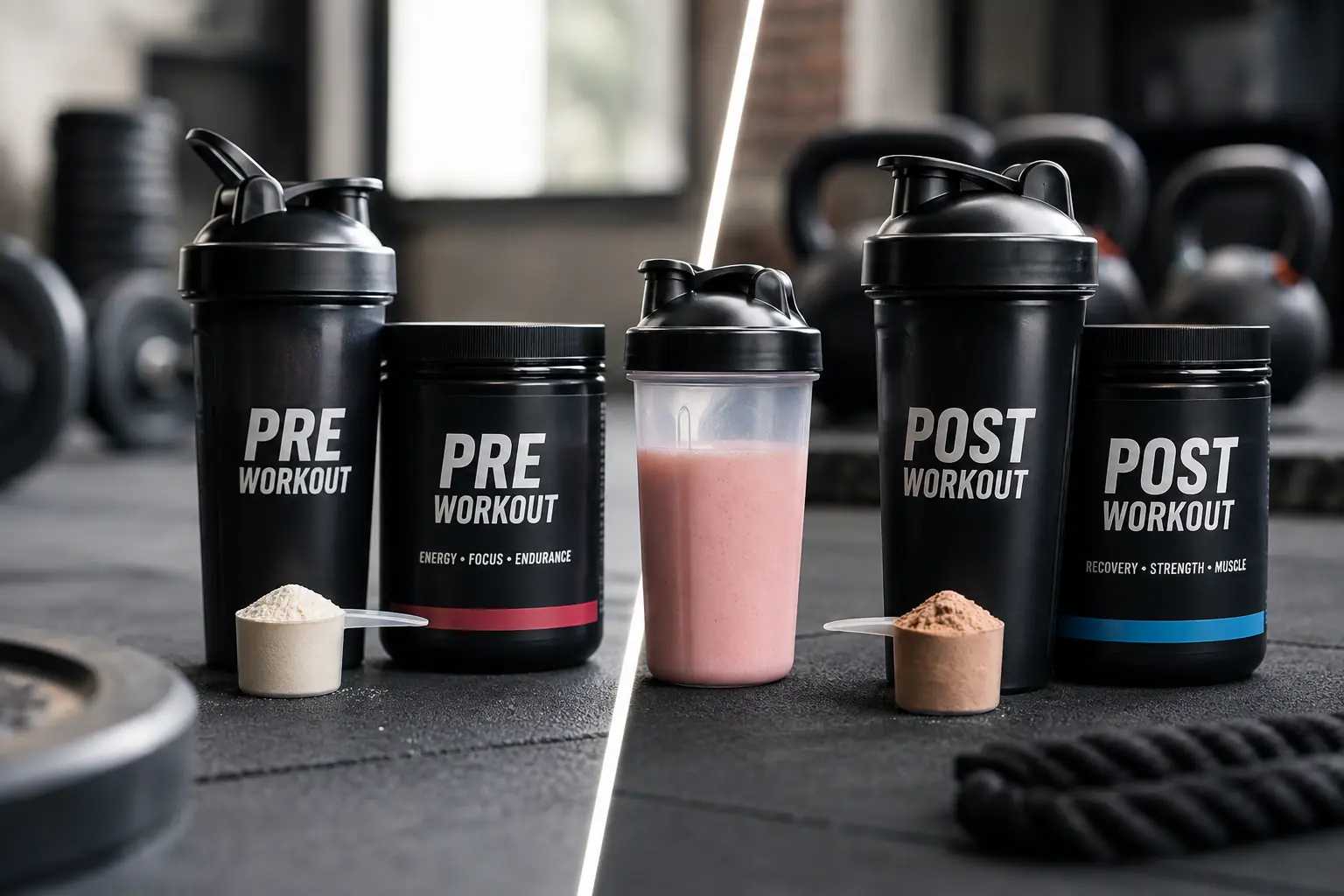
Best Pre-Workout and Post-Workout Supplements

You just finished a brutal gym session in Singapore’s heat. You’re drenched, exhausted, and wondering whether that protein shake is really enough to show for the hour you just put in.

Here’s the truth most gym-goers in Singapore discover too late: what you take before and after your workout matters as much as what you do during it. The right pre-workout supplement can be the difference between a flat session and a personal best. The right post-workout support can be the difference between recovering in 24 hours or dragging through soreness for three days.

But the supplement industry is noisy. Every brand claims to be essential. Every product promises transformation. This guide cuts through that noise and focuses on what actually works — backed by research, relevant to Singapore’s climate, and available without a prescription.

Pre-Workout – What to Take Before Training

The goal before a workout is simple: more energy, better blood flow, sharper focus. Everything you take pre-workout should serve one of these three purposes.

Creatine – The Most Researched Performance Supplement in History

If you only take one gym supplement, this should be it.

Creatine is the single most studied performance supplement in sports science — with over 500 peer-reviewed studies confirming its effectiveness. It works by replenishing ATP (your muscles’ immediate energy currency) faster during high-intensity efforts like heavy lifts, sprints, and explosive movements.

What creatine does in practical terms: you get an extra rep or two on your heavy sets, your power output on compound lifts increases, and over weeks of consistent use, this accumulated training volume translates into measurable strength and muscle gains.

Etixx Creatine 3000 uses Creapure — the purest form of creatine monohydrate available, manufactured in Germany with pharmaceutical-grade quality control. It also includes glutamine and taurine for additional muscle support. The “3000” refers to 3,000mg of creatine per serving, which aligns with the clinically effective daily dose.

How to take it: 3-5g daily, every day — not just on training days. Creatine works through saturation, meaning your muscles need consistently topped-up stores. Timing doesn’t matter much; what matters is daily consistency. Take it with your breakfast, post-workout shake, or whenever you’ll remember.

Singapore-specific note: Creatine increases intracellular water retention in muscles. In Singapore’s humidity, this means you need to stay extra hydrated. Increase your water intake by 500ml-1L on training days.

Beetroot Shots – Natural Nitric Oxide for Blood Flow

This one surprises most gym-goers because beetroot doesn’t feel like a “gym supplement.” But the science is compelling.

Beetroot is the richest natural source of dietary nitrate, which your body converts to nitric oxide — a molecule that widens blood vessels, improves blood flow to working muscles, and enhances oxygen delivery. More blood flow means better pumps during training, improved nutrient delivery to muscles, and reduced perceived effort at the same intensity.

Take a Beet It Organic Beetroot Shot 2-3 hours before training for optimal nitrate conversion. The turmeric variant adds anti-inflammatory benefits, which is useful if you’re training through mild joint discomfort. The ginger variant supports circulation and blood pressure.

Why it matters in Singapore: Training in heat increases cardiovascular demand. Better blood flow efficiency means your heart doesn’t have to work as hard to deliver oxygen to muscles in hot conditions — you fatigue slower and maintain performance longer, whether you’re training at an ActiveSG gym, your condo gym, or an outdoor calisthenics park.

Caffeine – Sharpen Focus, Not Just Energy

Caffeine before a workout isn’t about waking up — it’s about neurological performance. Caffeine blocks adenosine receptors in your brain, reducing perceived fatigue and improving reaction time, focus, and pain tolerance during training.

The key is dosage and format. Coffee works, but the caffeine content varies wildly between cups, and the liquid volume can cause stomach discomfort during intense training.

Nutrition X Caffeine Melt solves this with a precise 100mg dose in a tablet that dissolves on your tongue — no water needed, no stomach issues, faster absorption than capsules or gum. Pop one 20-30 minutes before your session.

Timing tip: If you train in the evening (common in Singapore where many people hit the gym after work at 7-9pm), be cautious with caffeine. It has a half-life of 5-6 hours, meaning a 7pm caffeine dose is still half-active at midnight. For evening sessions, consider limiting caffeine or skipping it entirely to protect sleep quality.

Pre-Workout Hydration – Start Before You Start

Singapore’s humidity means you’re already sweating before your first rep. Starting a workout even mildly dehydrated reduces strength output by up to 15% and impairs cognitive function.

Drop a Nutrition X Hydra+ Effervescent Tablet into 200ml of water 30 minutes before training. It provides sodium, potassium, magnesium, and calcium to preload your electrolyte levels before you start losing them through sweat. At only 1g of carbs, it won’t sit heavy in your stomach.

For longer sessions (60+ minutes of strength training, HIIT circuits, or CrossFit WODs), upgrade to Nutrition X HydraFuel mixed in your water bottle — it provides 36g of carbohydrates per serving alongside electrolytes, maintaining both energy and hydration throughout extended training.

Post-Workout – What to Take After Training

The window after your workout is when your body switches from breaking down to building up. What you provide in this window determines how quickly and effectively that switch happens.

Cherry Recovery Shots – Reduce Soreness by Tomorrow

DOMS — delayed onset muscle soreness — is the stiffness and pain you feel 24-48 hours after a hard workout. It’s caused by microtrauma in muscle fibres and the inflammatory response that follows.

Tart cherry is one of the most researched natural anti-inflammatories for exercise recovery. The anthocyanins in tart cherries reduce oxidative stress and inflammation, measurably decreasing the severity and duration of DOMS.

Beet It Regen Cherry+ Shot combines tart cherry with beetroot for both anti-inflammatory recovery and continued nitric oxide support. Take one within 30 minutes of finishing your session.

Real-world impact: If you train Monday and want to train the same muscle group again on Wednesday, cherry recovery shots can make that turnaround viable. Without recovery support, DOMS from Monday’s session can compromise Wednesday’s training quality.

Magnesium – The Mineral You Lose Every Session

Every muscle contraction depletes magnesium. Every drop of sweat carries it out of your body. In Singapore’s climate, you’re losing magnesium at a significantly higher rate than gym-goers in cooler countries.

Low magnesium manifests as lingering muscle cramps, poor sleep after evening workouts, slower recovery between sessions, and that persistent low-grade fatigue that doesn’t resolve with rest.

Immediately post-workout: Apply BetterYou Magnesium Gel directly to the muscles you trained. The concentrated gel format delivers sustained-release magnesium through the skin, targeting exactly where you need it. You’ll feel the tension release within minutes.

Daily maintenance: Take Magnesium Bisglycinate capsules — the most absorbable oral form. This maintains your systemic magnesium levels so you’re not starting each session in a depleted state. Take it in the evening for the added benefit of improved sleep quality.

HMB – Protect Muscle During Intense Training Phases

If you’re training at high intensity — heavy compound lifts 4-5 days a week, preparing for a competition, or running a demanding program like a strength cycle or body recomposition — your body is constantly balancing muscle breakdown and muscle building.

HMB (Beta-Hydroxy Beta-Methylbutyrate) tips that balance toward building. It’s an anti-catabolic compound, meaning it helps prevent excessive muscle protein breakdown during and after intense exercise.

Etixx HMB 1000 is designed specifically for this purpose. Take it daily during heavy training blocks — not just on workout days, as the anti-catabolic effect needs consistent levels to work.

Who benefits most: Anyone training at high volume or intensity, people in a caloric deficit who want to preserve muscle while losing fat, and anyone over 40 whose natural recovery capacity is declining.

Protein – But Make It Convenient

You already know you need protein post-workout. But in Singapore’s heat, the last thing many people want after a gym session is a thick, heavy protein shake.

For a lighter alternative that still delivers, keep Justine’s Protein Cookies in your gym bag. Each cookie provides approximately 5g of protein from almond meal and soy, is halal-certified, keto-friendly, and won’t melt in Singapore’s weather. Pair with a proper protein meal within 2 hours for complete recovery nutrition.

Browse the full protein products range for more options.

The Recovery Factor Most People Skip – Gut-Brain Support

Hard training doesn’t just stress your muscles — it stresses your entire system. Cortisol spikes during intense exercise, gut permeability increases (especially in Singapore’s heat), and the accumulated stress of a demanding training program can impair sleep, mood, and immune function.

This is where PS128 and PS23 psychobiotics add a layer of support that conventional gym supplements miss entirely. PS128 supports dopamine and serotonin pathways through the gut-brain axis — improving mood, mental resilience, and the neurological conditions for physical recovery. PS23 reduces cortisol, the stress hormone that in excess breaks down muscle tissue and impairs recovery.

Together, they address recovery from the inside out. You can read the full breakdown of how PS128 and PS23 support athletic recovery in our detailed guide.

Building Your Stack – Start Simple, Add as Needed

You don’t need everything from day one. Build based on your biggest gap:

Just starting out at the gym: Creatine daily + protein post-workout. That’s it. Master consistency before adding complexity.

Training 3-4 days per week, want better performance: Add beetroot shot pre-workout + magnesium gel post-workout + Hydra+ for hydration.

Training 5+ days per week, serious about results: Full stack: creatine + caffeine + beetroot (pre) → HydraFuel (intra) → cherry recovery shot + magnesium + HMB (post) → PS128+PS23 (daily recovery).

Browse the complete sports and fitness supplements range.

Frequently Asked Questions

What should I take 30 minutes before a workout?

A beetroot shot for blood flow, a caffeine melt for focus, and a Hydra+ electrolyte tablet in water for hydration. If you take creatine, timing doesn’t matter – just take it at some point during the day.

Is creatine safe to take every day?

Yes. Creatine monohydrate is the most studied supplement in sports science with an excellent safety profile at 3-5g daily. The myth about kidney damage has been repeatedly disproven in healthy individuals. Stay hydrated, especially in Singapore’s heat.

Do I need different supplements for strength training vs HIIT?

The core stack is the same. The main difference is hydration – HIIT and circuit training cause more sweat loss than traditional strength training, so increase your electrolyte intake accordingly. HydraFuel (with carbs) is more relevant for HIIT sessions over 45 minutes.

What’s more important — pre-workout or post-workout supplements?

Post-workout. Pre-workout supplements enhance the session itself, but post-workout supplements determine whether your body actually adapts and grows from that session. If you have to choose, prioritise recovery.
Posted on — Leave a comment

Evening Primrose Oil Benefits – What the Research Actually Shows

Evening Primrose Oil Benefits

Evening primrose oil is one of those supplements that everyone seems to recommend for “women’s health” – but when you ask what it actually does, the answers get vague. Something about hormones. Something about skin. Maybe PMS.

The reality is both more specific and more interesting than the generic claims suggest. Evening primrose oil contains a particular fatty acid that most people don’t get enough of, and when they supplement it, measurable things happen in their body’s inflammatory and hormonal pathways.

But not all evening primrose oil is equal, and not every claimed benefit holds up under research scrutiny. Here’s what the evidence actually supports – and what it doesn’t.

What Makes Evening Primrose Oil Different from Other Oils

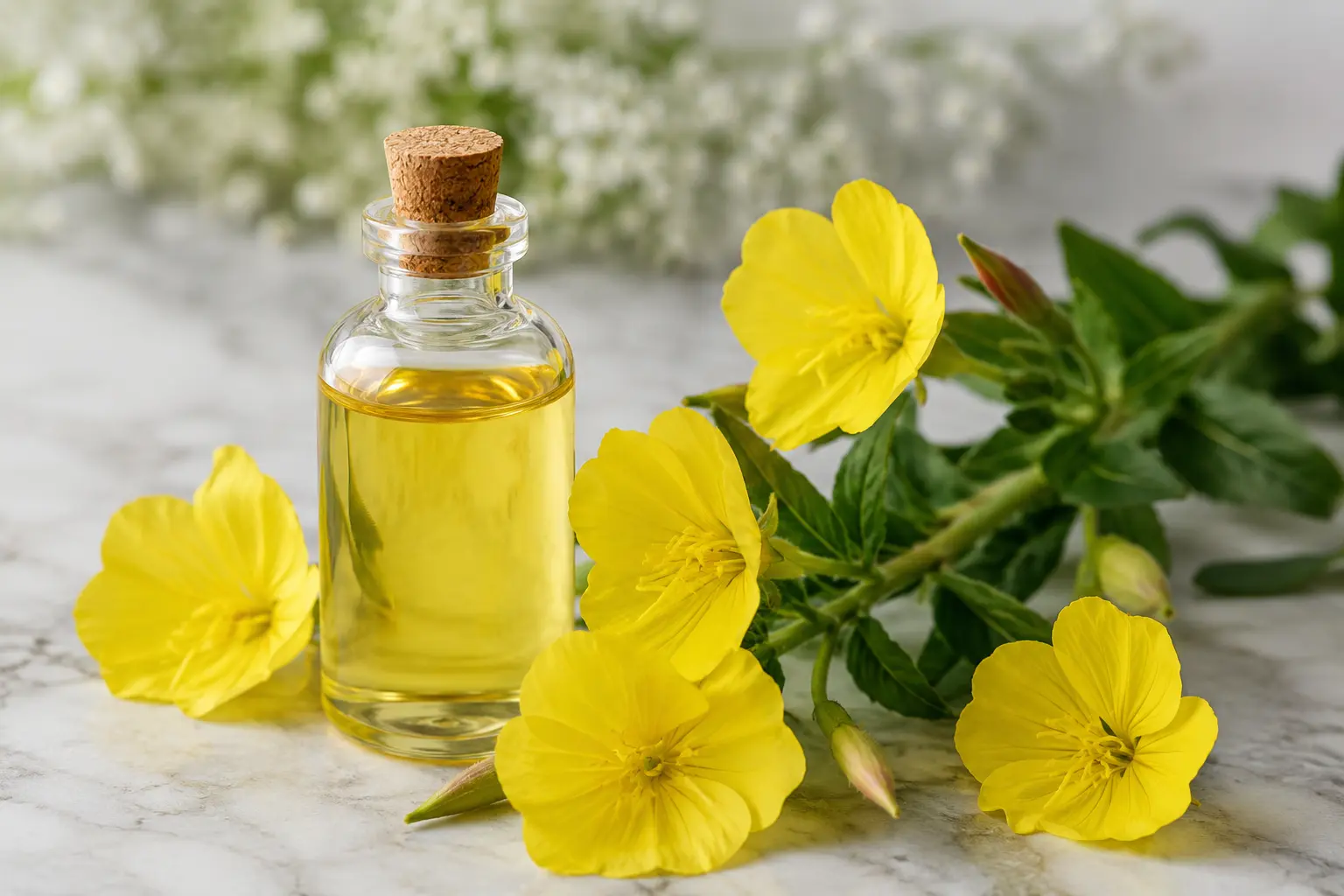
Evening primrose oil comes from the seeds of Oenothera biennis, a wildflower originally native to North America. The oil itself isn’t remarkable for its total fat content – it’s the specific type of fat that matters.

The active compound is GLA – gamma-linolenic acid, an omega-6 fatty acid. While omega-6 gets a bad reputation (most people consume too much of it from processed vegetable oils), GLA is the exception. Unlike the inflammatory omega-6s in your cooking oil, GLA converts in your body to DGLA (dihomo-gamma-linolenic acid), which produces anti-inflammatory compounds.

Your body can technically convert the linoleic acid found in nuts, seeds, and vegetable oils into GLA. But this conversion is slow and inefficient – particularly in people who are stressed, ageing, nutritionally depleted, or have certain genetic variations. For many people, direct GLA supplementation through evening primrose oil bypasses this bottleneck.

This is relevant because GLA influences prostaglandin production – hormone-like compounds that regulate inflammation, pain, and hormonal balance throughout your body. When GLA levels are adequate, these processes run more smoothly. When they’re low, things like PMS, skin inflammation, and breast pain can intensify.

Benefit 1 – PMS and Menstrual Health

This is the most well-known use of evening primrose oil, and the research supports it — with an important nuance.

Studies have shown that women who experience severe PMS symptoms often have lower levels of GLA or an impaired ability to convert linoleic acid to GLA. Supplementing with evening primrose oil directly provides the GLA their body isn’t making efficiently on its own.

The symptoms most consistently improved in research include breast tenderness in the days before menstruation, bloating and water retention during the premenstrual phase, mood changes including irritability and low mood, and cramping severity.

The mechanism makes biological sense: GLA-derived prostaglandins (specifically PGE1) have anti-inflammatory and smooth muscle-relaxing effects. When PGE1 levels are adequate, uterine cramping is less severe and breast tissue inflammation reduces.

For comprehensive menstrual support, some practitioners recommend combining evening primrose oil with magnesium bisglycinate – magnesium helps with muscle relaxation and cortisol management, while GLA addresses the inflammatory pathway. Together, they target PMS from two different angles.

Benefit 2 – Skin Health and Eczema

This is where the research has the longest history. Evening primrose oil has been studied for skin conditions since the 1980s, and the evidence is particularly strong for atopic dermatitis (eczema).

The connection is straightforward: your skin barrier needs essential fatty acids to function properly. When GLA levels are insufficient, the skin barrier weakens, moisture escapes, and irritants get in – leading to dryness, redness, itching, and inflammation.

Studies have demonstrated that GLA supplementation can improve clinical signs of atopic dermatitis, including reduced redness and itching, improved skin hydration and barrier function, and decreased need for topical steroids in some patients.

Beyond eczema, GLA supports general skin health by maintaining elasticity, supporting collagen structure, and reducing the oxidative stress that contributes to premature ageing. This is why evening primrose oil appears in both supplement form and in topical skincare products.

Benefit 3 – Breast Pain

Cyclical breast pain (mastalgia) – the tenderness and swelling that many women experience in the days before their period – has been a focus of several EPO studies.

The evidence suggests that GLA supplementation can reduce the severity and duration of cyclical breast pain, likely through the same prostaglandin-mediated mechanism that helps with PMS. By promoting anti-inflammatory PGE1 production, evening primrose oil helps reduce the breast tissue inflammation that causes discomfort.

This is significant because cyclical breast pain is extremely common – affecting up to 70% of women at some point – yet has few targeted treatment options. Evening primrose oil offers a well-tolerated, natural approach that addresses the underlying fatty acid imbalance rather than just masking symptoms.

Benefit 4 – Diabetic Neuropathy

This is perhaps the least well-known but most clinically compelling benefit of evening primrose oil.

Diabetic neuropathy — nerve damage caused by chronically elevated blood sugar — affects a significant proportion of people with diabetes. The nerve damage causes tingling, numbness, and pain, typically starting in the feet and hands.

Research has shown that GLA supplementation can improve nerve function and reduce neuropathy symptoms in diabetic patients. The mechanism involves GLA’s role in maintaining the structural integrity of nerve cell membranes and supporting healthy blood flow to nerve tissue.

This application highlights that evening primrose oil isn’t exclusively a “women’s supplement” – its benefits extend to anyone with conditions involving inflammation, nerve health, or essential fatty acid insufficiency.

Benefit 5 – Hormonal Balance During Menopause

During perimenopause and menopause, hormonal fluctuations can intensify inflammation and disrupt the body’s fatty acid metabolism. Some women find that symptoms like hot flushes, mood instability, and sleep disruption respond to GLA supplementation.

The research on evening primrose oil specifically for menopause is less conclusive than for PMS — some studies show benefit while others don’t reach statistical significance. However, the biological rationale is sound: GLA supports the prostaglandin pathways that help regulate body temperature and inflammation, both of which are disrupted during menopause.

For women experiencing menopausal symptoms, evening primrose oil works well alongside other targeted support. The BetterYou Magnesium Menopause Spray combines magnesium with ylang-ylang and clary sage for hot flush relief, while omega-3 DHA supports brain function and mood stability during hormonal transitions. You can read more about supplements for women’s health in our detailed guide.

What the Research Doesn’t Conclusively Support

Being honest about limitations is part of being evidence-based.

While evening primrose oil is widely recommended for rheumatoid arthritis, weight loss, and labour induction, the clinical evidence for these uses is either mixed or insufficient. Some preliminary studies show promise, but larger, well-designed trials haven’t consistently confirmed these benefits.

This doesn’t mean evening primrose oil doesn’t help with these conditions — it means the evidence isn’t strong enough yet to make confident claims. The benefits listed above (PMS, skin health, breast pain, diabetic neuropathy) have the most robust research support.

Not All Evening Primrose Oil Is the Same

This is a point most EPO guides skip, and it matters significantly.

The GLA content in evening primrose oil varies between brands – typically between 8% and 10%. Efamol Pure Evening Primrose Oil contains 11% GLA, which is up to 16% more than other brands. This difference comes from Efamol’s proprietary Rigel strain of evening primrose, developed through natural agricultural selection — not genetic modification.

What else sets Efamol apart:

350+ clinical studies. Efamol is the only evening primrose oil brand that has been used in over 350 clinical trials. When research papers report positive results for “evening primrose oil,” they’re frequently using Efamol as the study product. Buying a different brand and expecting the same results isn’t guaranteed — the studies were done with this specific oil.

Seed-to-product control. Efamol grows its own evening primrose plants in New Zealand and the Netherlands, controlling quality from planting through harvest, storage, and extraction. Most other EPO brands source oil from third-party suppliers with no control over growing conditions or processing.

One-step extraction. Efamol uses a proprietary single-step extraction method that maintains the natural stability of the oil and preserves GLA integrity. Multi-step processes used by other manufacturers can degrade the delicate fatty acids.

This matters because GLA is fragile. Heat, light, and oxygen can damage it during extraction and storage. If the GLA in your evening primrose oil has been degraded during processing, you’re not getting the active compound that the research supports.

How Evening Primrose Oil Connects to Brain Health

GLA isn’t just relevant for hormones and skin — it plays a role in brain health and cognitive function as well.

Your brain needs both omega-3 and omega-6 fatty acids in the right balance. GLA from evening primrose oil provides the anti-inflammatory omega-6 component, while DHA from fish oil provides the structural omega-3 component. Together, they support neurological function from two complementary directions.

This is why Efamol’s product range includes both evening primrose oil (GLA) and Efalex Brain Formula (DHA + GLA). The combination addresses the full spectrum of essential fatty acid needs for both brain and body.

For those also interested in the gut-brain approach to mental wellbeing, combining omega fatty acids with psychobiotics like PS128 creates a comprehensive strategy – fatty acids support brain structure, while psychobiotics support neurotransmitter production through the gut-brain axis.

How to Take Evening Primrose Oil

The typical dosage used in clinical studies ranges from 1,000mg to 4,000mg per day, depending on the condition being addressed. Most general supplementation starts at 1,000mg daily.

Take it with food – evening primrose oil is fat-soluble and absorbs better when consumed alongside dietary fat. Consistency matters more than timing; daily use over several weeks is needed before benefits become apparent, particularly for PMS and skin conditions.

For PMS specifically, some practitioners recommend taking evening primrose oil throughout the cycle rather than only during the premenstrual phase, as maintaining consistent GLA levels produces better results than intermittent supplementation.

Frequently Asked Questions

How long does evening primrose oil take to work?

For PMS symptoms, most women notice improvements within 2-3 menstrual cycles of consistent daily use. For skin conditions, improvements typically appear within 4-8 weeks. Immediate effects shouldn’t be expected — GLA works by gradually shifting your body’s inflammatory balance.

Can men take evening primrose oil?

Absolutely. Despite being marketed primarily to women, evening primrose oil’s GLA content benefits anyone with inflammatory conditions, skin issues, nerve health concerns, or essential fatty acid insufficiency. The diabetic neuropathy research, for example, included both men and women.

Is evening primrose oil safe during pregnancy?

The research on EPO during pregnancy is inconclusive. While it has been traditionally used for cervical ripening near the end of pregnancy, clinical evidence doesn’t firmly support this use. Consult your healthcare provider before taking EPO during pregnancy or breastfeeding.

What’s the difference between evening primrose oil and fish oil?

They provide different essential fatty acids. Evening primrose oil provides GLA (an anti-inflammatory omega-6), while fish oil provides EPA and DHA (omega-3s). They complement rather than replace each other — your body needs both for optimal health. Browse omega-3 and omega-6 supplements to find the right combination.

Posted on — 1 Comment

Digestive Enzymes vs Probiotics – Which One Do You Actually Need?

Digestive Enzymes vs Probiotics

You’re standing in front of a supplement shelf – or scrolling through an online store – staring at digestive enzymes on one side and probiotics on the other. Both claim to help your gut. Both have convincing reviews. And you have no idea which one you actually need.

Here’s the short answer: they do completely different things. Choosing the wrong one won’t hurt you, but it won’t fix your problem either. The right choice depends on what’s actually going wrong in your gut — and once you understand that, the decision becomes obvious.

The Simple Difference (No Science Jargon)

Think of your digestive system like a kitchen.

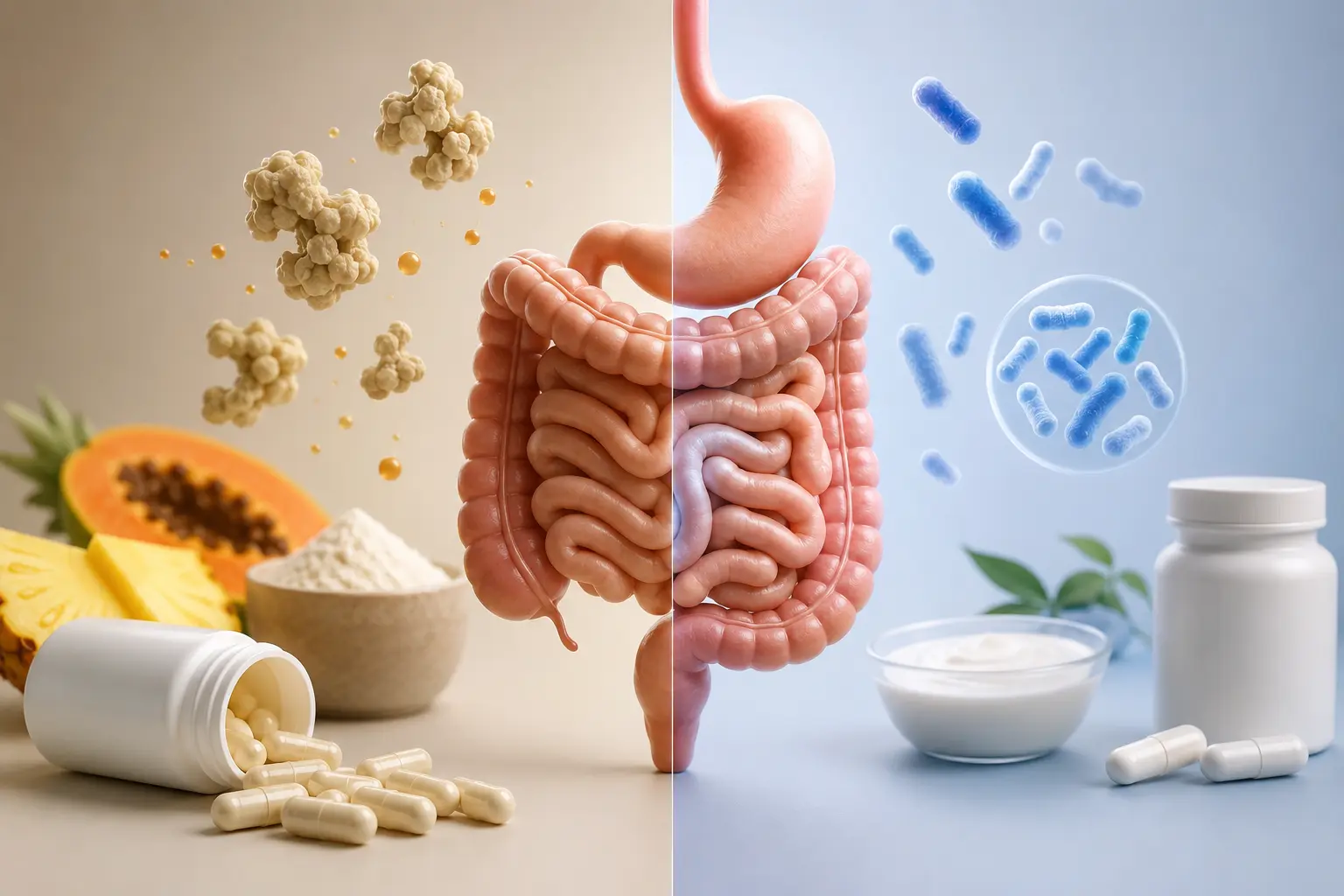
Digestive enzymes are the knives and blenders. They physically break food down into pieces small enough for your body to absorb. Without enough enzymes, food sits in your gut partially undigested, and bacteria ferment it – producing gas, bloating, and discomfort.

Probiotics are the kitchen staff. They keep the environment clean, balanced, and running smoothly. They don’t break down food directly, but they maintain the conditions that allow healthy digestion to happen. Without enough good bacteria, harmful bacteria take over, and the whole system becomes chaotic.

You can have the best kitchen staff in the world, but if the knives are dull, the food still won’t get prepared properly. And you can have the sharpest knives available, but if nobody’s running the kitchen, things fall apart.

That’s why the answer for many people isn’t one or the other – it’s both.

When You Need Digestive Enzymes

Enzymes are your answer if your symptoms happen right after eating. This is the key clue. If you feel heavy, bloated, gassy, or uncomfortable within 30-60 minutes of a meal, your body likely isn’t producing enough enzymes to break down what you just ate.

Common scenarios where enzymes help:

You feel bloated after large meals. Your body produces a fixed amount of enzymes per meal. When you eat more than usual – a big hawker centre lunch, a buffet, a celebration dinner – your natural enzyme supply can’t keep up with the volume.

Specific foods cause problems. If dairy makes you bloated (lactase deficiency), beans give you gas (alpha-galactosidase deficiency), or fatty foods feel heavy (lipase deficiency), you’re missing the specific enzyme that breaks down that food type. This is different from a food allergy – it’s an enzyme gap.

You’re over 40. Enzyme production naturally declines with age.  What you could eat comfortably at 25 starts causing issues at 45 – not because the food changed, but because your enzyme output did.

You eat quickly or under stress. When you eat fast or while stressed (common in Singapore’s work culture), your body diverts resources away from digestion. Enzyme production drops, and food reaches your intestines less prepared than it should be.

Enzymedica Digest is one of the most comprehensive enzyme formulations available – it covers multiple enzyme types (protease, lipase, amylase, cellulase, lactase) so you’re covered regardless of which food causes your issues. For a locally formulated alternative, Activhealth EnzymeMAX provides broad-spectrum enzyme support.

Browse all digestive enzyme supplements.

When You Need Probiotics

Probiotics are your answer if your symptoms are ongoing and not tied to specific meals. This is the distinguishing clue. If your gut feels off regardless of what you eat — irregular bowel movements, alternating between constipation and loose stools, general discomfort throughout the day – the issue is likely your gut microbiome rather than enzyme insufficiency.

Common scenarios where probiotics help:

After antibiotics.  Antibiotics kill harmful bacteria but also destroy beneficial ones. If your digestion hasn’t been right since a course of antibiotics, your microbiome needs rebuilding.

Chronic bloating that doesn’t correlate with meals. If you wake up flat and end the day bloated regardless of what you ate, it’s often bacterial overgrowth or imbalance rather than enzyme deficiency.

IBS symptoms. Alternating constipation and diarrhoea, abdominal pain that improves after a bowel movement, and sensitivity to stress are classic signs of microbiome disruption. The gut-brain axis plays a major role in IBS — which is why stress makes symptoms worse.

Weakened immunity. Roughly 70% of your immune system resides in your gut. If you’re getting sick frequently, your microbiome may need support.

Digestive health probiotics target gut balance and regularity. These contain strains specifically studied for digestive function — different from the generic probiotics you might find at a pharmacy.

The Third Option Most People Don’t Know About – Psychobiotics

Here’s where this guide goes beyond what you’ll find in most enzymes-vs-probiotics articles.

If your digestive issues are connected to stress, anxiety, mood, or sleep problems, neither standard enzymes nor standard probiotics fully address the root cause. Your gut and brain are in constant communication through the gut-brain axis, and disruption on either side affects the other.

This is where psychobiotics come in – a specific class of probiotics that work on the gut-brain connection rather than just digestion.

PS128 (Lactiplantibacillus plantarum PS128) modulates dopamine and serotonin production through the gut, supporting mood, focus, and stress resilience. PS128 combined with PS23 adds cortisol reduction – directly lowering the stress hormones that trigger digestive flare-ups.

If your gut gets worse when you’re stressed, psychobiotics are worth exploring. They address the brain side of the gut-brain equation that standard digestive supplements miss entirely.

How to Choose – The Quick Decision Guide

Instead of guessing, match your primary symptom to the right supplement:

“I feel bloated and heavy RIGHT AFTER eating” → Start with digestive enzymes

“My gut is unpredictable ALL DAY regardless of meals” → Start with digestive probiotics

“My digestion gets worse when I’m stressed or anxious” → Start with psychobiotics (PS128)

“I have multiple issues — post-meal bloating AND irregular digestion” → Use both: enzymes with meals + probiotics daily

“I’ve tried everything and nothing works consistently” → Consider all three: enzymes for meal digestion + probiotics for gut balance + psychobiotics for the stress-gut cycle

Browse the full digestive health range to find the right combination for your needs.

Can You Take Enzymes and Probiotics Together?

Yes,  they don’t interfere with each other because they work through completely different mechanisms. Enzymes break down food chemically; probiotics are living organisms that colonise your gut. Taking both is like sharpening the knives AND hiring better kitchen staff.

Timing tip: Take enzymes right before or with your meal (they need food to work on). Take probiotics with or after your meal (food provides a buffer that helps the bacteria survive stomach acid).

Singapore-Specific Considerations

A few factors make digestive support particularly relevant for people living in Singapore.

Hawker food and eating out culture. Singaporeans eat out frequently — often rich, oily, or spicy food that demands more from your digestive enzymes. If you feel heavy after your char kway teow or nasi lemak, it’s likely an enzyme issue.

Air-conditioned environments. Constant temperature transitions between outdoor heat and indoor cold can affect gut motility and microbial balance — contributing to the irregular digestion many Singaporeans experience.

High-stress work culture. Singapore’s demanding work environment keeps cortisol elevated, which directly disrupts both enzyme production and microbiome balance. This is where stress management through the gut-brain axis becomes relevant.

Processed and convenience foods. While delicious, many convenience meals are low in natural enzymes and fibre that support healthy digestion. Supplementing fills the gap that modern eating patterns create.

Frequently Asked Questions

Do digestive enzymes kill probiotics?

No. Digestive enzymes break down food components like proteins, fats, and carbohydrates. They don’t target or destroy probiotic bacteria. You can safely take both at the same meal.

How quickly do digestive enzymes work?

Enzymes work almost immediately — you should notice reduced bloating and heaviness within 30-60 minutes of taking them with a meal. Probiotics take longer, typically 2-4 weeks of daily use before consistent improvements appear.

Should I take probiotics every day?

For ongoing gut health, yes. Unlike enzymes (which you can take as needed with problem meals), probiotics work by gradually building up beneficial bacteria colonies in your gut. Consistency matters more than dosage.

What’s the difference between probiotics and psychobiotics?

All psychobiotics are probiotics, but not all probiotics are psychobiotics. Standard probiotics target digestive balance. Psychobiotics are specific strains (like PS128) that have been clinically studied for their effects on the gut-brain axis – influencing mood, stress, sleep, and neurological function beyond just digestion.

Posted on — 1 Comment

Best Halal Health Supplements in Singapore – A Complete Guide

Best supplements singapore

Finding halal-certified health supplements in Singapore shouldn’t be this hard.

You walk into a pharmacy or browse an online store, pick up a product that looks promising, flip it over – and there’s no halal certification anywhere on the packaging. The ingredients list mentions “gelatin” without specifying the source. Or there’s a vague “natural flavouring” that could mean anything.

For the more than 15% of Singapore’s population who follow halal dietary requirements, this is a daily frustration. And it’s not just about religious compliance. A growing number of non-Muslim consumers in Singapore are choosing halal-certified products because they associate the certification with higher quality standards, cleaner ingredients, and ethical production practices.

This guide cuts through the confusion. Every product listed here is halal-certified, available in Singapore, and actually worth taking.

What Makes a Supplement “Halal” – And Why It Matters

Halal certification for supplements goes beyond just avoiding pork. Several common supplement ingredients can be problematic.

Gelatin is the biggest one. Most soft-gel capsules and gummy supplements use gelatin as a binding agent. Standard gelatin comes from pork or non-halal-slaughtered beef — making the entire product non-halal regardless of the active ingredient inside.

Alcohol-based extracts are another concern. Some herbal supplements and liquid formulations use ethanol as a solvent during extraction. While the final product may contain minimal alcohol, the use of alcohol in processing can affect halal compliance depending on the certification body’s standards.

Emulsifiers and coatings like stearic acid and magnesium stearate can be derived from animal or plant sources. Without certification, there’s no way to know which source was used.

This is why halal certification matters — it verifies the entire production chain, not just the final ingredient list. A certified product has been audited from raw material sourcing through manufacturing to packaging.

Halal-Certified Supplements Available at WellbeingSG

Justine’s Protein and Keto Cookies – Halal, Keto, and Gluten-Free

Finding a snack that’s simultaneously halal, keto-friendly, and actually tastes good used to be nearly impossible in Singapore. Justine’s solved that problem.

Made in New Zealand with pure almond meal, these cookies deliver high protein and just 2g net carbs per cookie — making them one of the few snacks that fit halal, keto, and gluten-free requirements all at once.

Available flavours include Afghan Crunch, Chocolate Chip, Double Choc Brownie, Choco Fudge, Peanut Butter, and Raspberry White Choc. Each one is individually wrapped and shelf-stable — perfect for keeping in your office drawer, gym bag, or children’s school bag.

Best for: Anyone following halal + keto, gym-goers needing convenient protein, parents looking for halal school snacks, and anyone who wants a guilt-free treat without compromising dietary requirements.

The Ginger Crunch is the bestseller — sugar-free with a warming ginger kick that pairs surprisingly well with afternoon tea.

What sets them apart: No wheat, no added sugar, dairy-free options available. Each cookie contains roughly 5g of protein from almond meal and soy — not from whey, which makes them suitable for people with dairy sensitivities.

Herbaland Gummy Vitamins – Halal, Vegan, and Low Sugar

If you’ve ever tried to find gummy vitamins that are both halal and actually effective, you know the struggle. Most gummy supplements use pork gelatin. The few halal options available often contain 3-4g of sugar per gummy — defeating the purpose of a health supplement.

Herbaland takes a different approach. Their gummies are made with pectin (plant-based) instead of gelatin, contain less than 1g of sugar per serving, and are high in fibre. They’re halal-certified, vegan, and made in Canada with clean ingredients.

The Herbaland Halal Gummy Bundle includes three varieties at just $15.

Vitamin C Gummies: For daily immune support. Particularly relevant in Singapore where air-conditioned environments and crowded public transport increase exposure to circulating viruses.

Apple Cider Vinegar Gummies: For digestive support and metabolism. A convenient way to get ACV benefits without the harsh taste of liquid vinegar.

Turmeric Gummies: For anti-inflammatory support. Useful for joint comfort, recovery after exercise, and general wellness.

Best for: Families wanting halal vitamins for both adults and children, anyone who dislikes swallowing pills, health-conscious consumers who want low-sugar alternatives to traditional gummy vitamins.

Browse all halal-certified healthy snacks available at WellbeingSG.

Beyond Halal – Other Dietary Certifications That Matter

One of the advantages of the brands we carry is that halal certification is often just one of several quality markers. Here’s what else to look for.

Informed Sport certification means a product has been batch-tested for banned substances — important for Muslim athletes who need both halal compliance and anti-doping assurance. Nutrition X and several Etixx products carry this certification alongside their quality standards.

Vegan certification overlaps significantly with halal in terms of excluding animal-derived ingredients, though it’s not a substitute for halal certification. Products from Herbaland and BetterYou sprays and lotions carry both vegan and cruelty-free certifications.

Gluten-free certification matters for the significant overlap between halal consumers and those with celiac disease or gluten sensitivity. All Justine’s cookies are certified gluten-free.

What About Supplements Without Halal Certification?

Not every supplement on the market carries halal certification, and this doesn’t automatically make it non-halal. Some products use only plant-based or mineral-based ingredients that are inherently halal — they simply haven’t gone through the formal certification process.

For example, BetterYou magnesium sprays use magnesium chloride sourced from an ancient underground seabed, combined with essential oils. The ingredients are inherently plant and mineral-based. Similarly, Metabolics Magnesium Bisglycinate capsules use vegetarian-friendly ingredients.

The rule of thumb: If you require formal halal certification, look for the logo on the packaging. If you’re comfortable with ingredient-level assessment, check for gelatin (the most common non-halal ingredient in supplements), alcohol-based solvents, and animal-derived emulsifiers.

When in doubt, contact us — we can check directly with our brand partners on specific ingredient sourcing for any product in our range.

How to Check if a Supplement Is Genuinely Halal

Unfortunately, not every “halal” claim is equally reliable. Here’s how to verify.

Look for a recognised certification body’s logo. In Singapore, MUIS (Majlis Ugama Islam Singapura) is the national halal authority. International certifications from bodies recognised by MUIS or JAKIM (Malaysia’s equivalent) are also accepted.

Check the certificate, not just the logo. Legitimate halal certification comes with a certificate number and expiry date. If a brand claims halal status but can’t provide a certificate, treat the claim with caution.

Read the actual ingredients. Even with certification, it’s good practice to understand what you’re taking. Look for gelatin, carmine (red colouring from insects), shellac (coating from insects), and alcohol-based ingredients.

Buy from authorised channels. This is particularly important because counterfeit and grey-market supplements may not maintain the halal integrity of the original product if storage and handling standards aren’t followed. WellbeingSG is the authorised distributor for every brand we carry, with a verified supply chain and BizSAFE-certified operations.

The Bigger Picture – Halal Health Is Growing in Singapore

The halal wellness market isn’t niche anymore. The global halal food and beverage market was valued at $2.72 trillion in 2025 and is projected to reach $5.87 trillion by 2035. Asia Pacific leads this growth, with Singapore positioned as a key hub.

What’s driving this isn’t just the Muslim population. Increasingly, consumers across all backgrounds are choosing halal-certified products because the certification process demands ingredient transparency, supply chain accountability, and manufacturing standards that go beyond basic food safety requirements.

For health supplements specifically, this trend means more brands are investing in halal certification, more product options are becoming available, and the days of having to choose between “halal” and “effective” are ending.

Frequently Asked Questions

Are gummy vitamins halal?

Most gummy vitamins are NOT halal because they use pork-derived gelatin. Herbaland gummies are an exception – they use plant-based pectin instead of gelatin and are halal-certified. Always check for a halal certification logo rather than assuming.

Can I find halal keto snacks in Singapore?

Yes. Justine’s Keto Cookies are halal-certified, contain only 2g net carbs per cookie, and are available in 6 flavours. They’re one of the few products that meet halal, keto, and gluten-free requirements simultaneously.

How do I know if a supplement’s gelatin is halal?

The only reliable way is halal certification from a recognised body. Some brands use bovine gelatin from halal-slaughtered animals, and some use fish gelatin — both can be halal if properly certified. If the packaging doesn’t specify, assume pork-derived gelatin unless certified otherwise.

Is WellbeingSG halal-certified?

WellbeingSG carries both halal-certified and non-halal-certified products. Halal products are clearly labelled on each product page. We source directly from manufacturers through verified supply chains and can provide certification details for any halal product on request.

Posted on — Leave a comment

7 Signs You Might Be Magnesium Deficient – And What to Do About It

7 Signs You Might Be Magnesium Deficient

You’re eating reasonably well. You’re exercising. You’re trying to get enough sleep. But something still feels off – maybe your muscles cramp for no reason, or you lie awake at 2am staring at the ceiling, or you feel anxious without anything to be anxious about.

What if it’s not stress, or ageing, or “just how things are”? What if your body is simply running low on one mineral that affects over 300 processes in your body – and you have no idea?

Magnesium deficiency is one of the most common nutritional gaps in the world. An estimated 2.4 billion people globally – roughly 31% of the population – don’t get enough of it. In Asia, the numbers are even higher, with studies showing that over 64% of adults in the region consume below the estimated average requirement.

The tricky part? Magnesium deficiency rarely shows up on standard blood tests because only 1% of your body’s magnesium is in your blood. The rest is in your bones, muscles, and cells – where it does its actual work. So you can be significantly deficient without your bloodwork flagging anything.

Here are the seven signs your body might be telling you something.

1. Muscle Cramps, Twitches, or Restless Legs

This is the sign most people recognise – that sudden calf cramp at night, an eyelid that won’t stop twitching, or legs that feel like they need to move constantly when you’re trying to sleep.

Magnesium regulates calcium flow into muscle cells. When magnesium is low, calcium enters muscle cells unchecked, causing them to contract when they shouldn’t. The result is involuntary cramping, twitching, or that restless uncomfortable feeling in your legs at night.

This is particularly common in Singapore because of the tropical climate. You lose magnesium through sweat, and in Singapore’s humidity, you’re sweating significantly more than people in cooler climates – even if you don’t notice it. Runners and active individuals are especially vulnerable because exercise compounds the loss.

What to do: For immediate targeted relief, apply BetterYou Magnesium Oil Original Spray directly to the muscles that cramp. The transdermal magnesium absorbs through the skin and reaches the affected area within minutes. For ongoing prevention, take Magnesium Bisglycinate capsules daily – bisglycinate is the most absorbable oral form and doesn’t cause the digestive issues that cheaper magnesium forms can.

2. You Can’t Sleep – Or Your Sleep Isn’t Restorative

You get seven or eight hours, but wake up feeling like you barely rested. Or you fall asleep fine but wake at 3am and can’t get back to sleep. Or it takes you 45 minutes of tossing before you drift off.

Magnesium plays a direct role in activating your parasympathetic nervous system – the “rest and digest” mode that your body needs to enter before sleep becomes possible. It also regulates melatonin production and binds to GABA receptors, the neurotransmitter responsible for calming brain activity.

When magnesium is low, your nervous system stays in a state of low-grade activation. You might not feel obviously wired, but your body isn’t shifting into the deep relaxation needed for restorative sleep.

What to do: Build a magnesium-based bedtime routine. Apply BetterYou Magnesium Sleep Lotion (which combines magnesium with lavender and chamomile) to your chest and shoulders 20 minutes before bed. The magnesium relaxes your muscles while the aromatherapy calms your mind. For children who struggle with bedtime, the BetterYou Kids Magnesium Sleep Lotion is paediatrician approved and contains gentle botanicals including oat extract and calendula — making it part of a calming bedtime ritual. Alternatively, the Kids Magnesium Sleep Spray works for quick application.

Pair topical magnesium with oral Magnesium Bisglycinate taken an hour before bed for both surface-level muscle relaxation and deeper systemic support.

3. Anxiety, Irritability, or Unexplained Mood Changes

You feel on edge without a clear reason. Small things irritate you more than they should. You might describe it as a general sense of unease – not full-blown anxiety, but a persistent low-level tension that won’t switch off.

Magnesium modulates the HPA axis (hypothalamic-pituitary-adrenal axis) – the system that controls your stress response. When magnesium is adequate, your body produces an appropriate amount of cortisol in response to stress and then brings it back down. When magnesium is low, cortisol stays elevated longer than it should, keeping you in a state of heightened alert.

Research published in 2023 found a significant association between magnesium supplementation and reduced symptoms of depression and anxiety. A 2024 systematic review confirmed benefits for people with mild anxiety and insomnia.

This creates a vicious cycle: stress depletes magnesium, and low magnesium amplifies your stress response — which depletes magnesium further. You can read more about how cortisol and stress hormones affect your body and the role of the gut-brain axis in mental wellbeing.

What to do: Address both the magnesium deficiency and the stress cycle. Magnesium Bisglycinate crosses the blood-brain barrier more effectively than other forms, making it the best choice for mood and anxiety support. For a comprehensive approach, consider combining it with PS128 and PS23 psychobiotics – PS23 has been clinically shown to reduce cortisol levels, which complements magnesium’s calming effects on the nervous system.

4. Brain Fog and Difficulty Concentrating

You read the same email three times and still can’t absorb it. You walk into a room and forget why. Conversations feel like they’re happening through a filter. You know you’re capable of sharp thinking – it just isn’t happening.

Magnesium is essential for synaptic plasticity – the brain’s ability to form and strengthen connections between neurons. It also regulates NMDA receptors, which are critical for learning, memory formation, and sustained attention. When magnesium levels drop, these processes slow down, and the subjective experience is mental fog.

This is especially relevant if you work in a high-pressure office environment in Singapore, where most of the population already struggles with vitamin D deficiency — another nutrient that affects cognitive function. The combination of low magnesium and low vitamin D can compound brain fog significantly.

What to do: Start with Magnesium Bisglycinate daily and check your vitamin D status. For a complete focus and concentration approach, consider adding Efamol Efalex Brain Formula for DHA (the brain’s structural fatty acid) and PS128 for dopamine support through the gut-brain axis.

5. Joint Stiffness and Body Aches

Your joints feel stiff in the morning. Your body aches after sitting for too long. Recovery from exercise takes longer than it used to. You might chalk it up to ageing, but magnesium deficiency can make these symptoms worse — or even cause them.

Magnesium has anti-inflammatory properties and helps regulate calcium deposition. When magnesium is low, calcium can deposit in soft tissues and joints rather than in bones where it belongs, contributing to stiffness and discomfort. Magnesium also supports the production of joint lubricating compounds and helps muscles around joints relax properly.

What to do: Apply BetterYou Magnesium Oil Joint Spray directly to stiff joints. It combines magnesium chloride with glucosamine for targeted joint support. For post-exercise recovery, BetterYou Magnesium Gel provides concentrated, sustained-release magnesium specifically designed for before and after physical activity. Combining topical with oral magnesium and omega-3 supplements for systemic anti-inflammatory support creates a comprehensive joint care approach.

6. Hormonal Changes Feel Worse Than They Should

For women going through perimenopause or menopause, magnesium deficiency can intensify symptoms that are already challenging – particularly hot flushes, sleep disruption, mood swings, and anxiety.

Magnesium helps regulate oestrogen metabolism and supports the nervous system transitions that happen during hormonal changes. When magnesium is adequate, the body handles these shifts more smoothly. When it’s depleted — which stress, poor sleep, and ageing all contribute to — every hormonal symptom amplifies.

Studies have also shown a connection between magnesium status and PMS severity. Women with lower magnesium levels tend to experience more intense cramps, bloating, and mood changes in the days before their period.

What to do: The BetterYou Magnesium Menopause Spray is specifically formulated for this — combining magnesium chloride with ylang-ylang and clary sage essential oils that support hormonal balance. It’s GenM certified (a menopause-friendly product certification) and can be used alongside oral magnesium for comprehensive support. For PMS and general women’s health, Efamol Evening Primrose Oil provides GLA that further supports hormonal balance. Read more about supplements for women’s health.

7. Persistent Fatigue Despite Adequate Rest

You slept eight hours. You ate well. You didn’t overexert yourself. And yet, by 2pm, you feel exhausted. Not sleepy exactly – just drained.

Magnesium is required for ATP production — adenosine triphosphate, the molecule your cells use as energy. Every cell in your body needs magnesium to produce and use energy. When magnesium is insufficient, energy production at the cellular level becomes less efficient, and you feel it as a persistent, unexplained tiredness that rest doesn’t fix.

This is different from the tiredness caused by poor sleep (sign #2). Sleep-related fatigue improves when you sleep better. Magnesium-related energy depletion persists even when sleep is adequate because the issue is at the cellular metabolism level.

What to do: Oral Magnesium Bisglycinate is the priority here since systemic magnesium levels need to increase for cellular energy production to improve. For a relaxing boost, BetterYou Magnesium Body Lotion with shea butter, coconut oil and vitamin E provides transdermal magnesium alongside skin nourishment – a daily moisturising routine that doubles as supplementation. BetterYou Magnesium Bath Flakes are another option — a 20-minute magnesium bath after a long day helps both energy restoration and muscle recovery.

Why Singapore Makes Magnesium Deficiency Worse

Several factors specific to life in Singapore compound the risk of magnesium deficiency.

Tropical heat and humidity. You lose magnesium through sweat. Even non-exercising adults in Singapore sweat more than people in temperate climates simply from the environmental heat. Air-conditioned environments reduce sweating but also reduce the thirst signal that prompts fluid and electrolyte intake.

High-stress culture. Singapore’s demanding work environment means chronically elevated cortisol, which directly depletes magnesium stores. The more stressed you are, the faster you lose magnesium — and the more you need it.

Processed food prevalence. Hawker centre and convenience meals, while delicious and practical, are often low in magnesium-rich foods like dark leafy greens, nuts, and whole grains. Modern food processing strips magnesium from many ingredients.

Indoor lifestyle. As we covered in our vitamin D deficiency article, most Singaporeans spend the vast majority of their time indoors. This limits not just vitamin D production but also exposure to magnesium-rich whole foods that outdoor, agrarian lifestyles naturally provide.

Which Type of Magnesium Is Right for You?

Not all magnesium supplements are the same. Choosing the right form depends on your primary symptoms.

For sleep and anxiety: Magnesium Bisglycinate capsules (oral, crosses blood-brain barrier) plus BetterYou Sleep Spray or Sleep Lotion (topical, with lavender)

For muscle cramps and general deficiency: BetterYou Magnesium Oil Original Spray (fast topical relief) plus Bisglycinate capsules (systemic support)

For sports recovery: BetterYou Magnesium Gel (concentrated, sustained release for pre/post workout)

For joint stiffness: BetterYou Magnesium Joint Spray (magnesium + glucosamine, targeted application)

For menopause symptoms: BetterYou Magnesium Menopause Spray (magnesium + ylang-ylang and clary sage)

For children’s sleep: BetterYou Kids Sleep Spray or Kids Sleep Lotion (paediatrician approved, ages 1+)

For relaxation and skin care: BetterYou Magnesium Body Lotion (shea butter + coconut oil + magnesium)

Browse the full range of magnesium products to find the right format for your needs.

Frequently Asked Questions

How do I know if I’m magnesium deficient?

Standard blood tests only measure serum magnesium (1% of total body magnesium), so they often miss deficiency. The most practical approach is to assess your symptoms — if you have two or more of the signs listed above, magnesium supplementation is worth trying. You can also request a red blood cell (RBC) magnesium test from your doctor, which gives a more accurate picture than standard serum tests.

How much magnesium do I need daily?

The recommended daily allowance is approximately 400-420mg for adult men and 310-320mg for adult women. However, people under chronic stress, those who exercise regularly, or those living in tropical climates like Singapore may need more. Most studies showing clinical benefits use doses of 200-400mg of elemental magnesium from supplements, in addition to dietary intake.

Can I take too much magnesium?

Magnesium from food is safe in any amount because your kidneys efficiently remove the excess. From supplements, extremely high doses (above 5,000mg) can cause loose stools – which is actually the body’s natural way of indicating it has enough. Magnesium bisglycinate and transdermal forms are the least likely to cause this effect. If you experience loose stools, simply reduce the dose.

How long does it take to correct magnesium deficiency?

Most people notice improvements in sleep quality and muscle cramps within 1-2 weeks. Anxiety and mood improvements typically take 2-4 weeks. Full replenishment of magnesium stores can take 4-6 weeks of consistent daily supplementation.

Posted on — Leave a comment

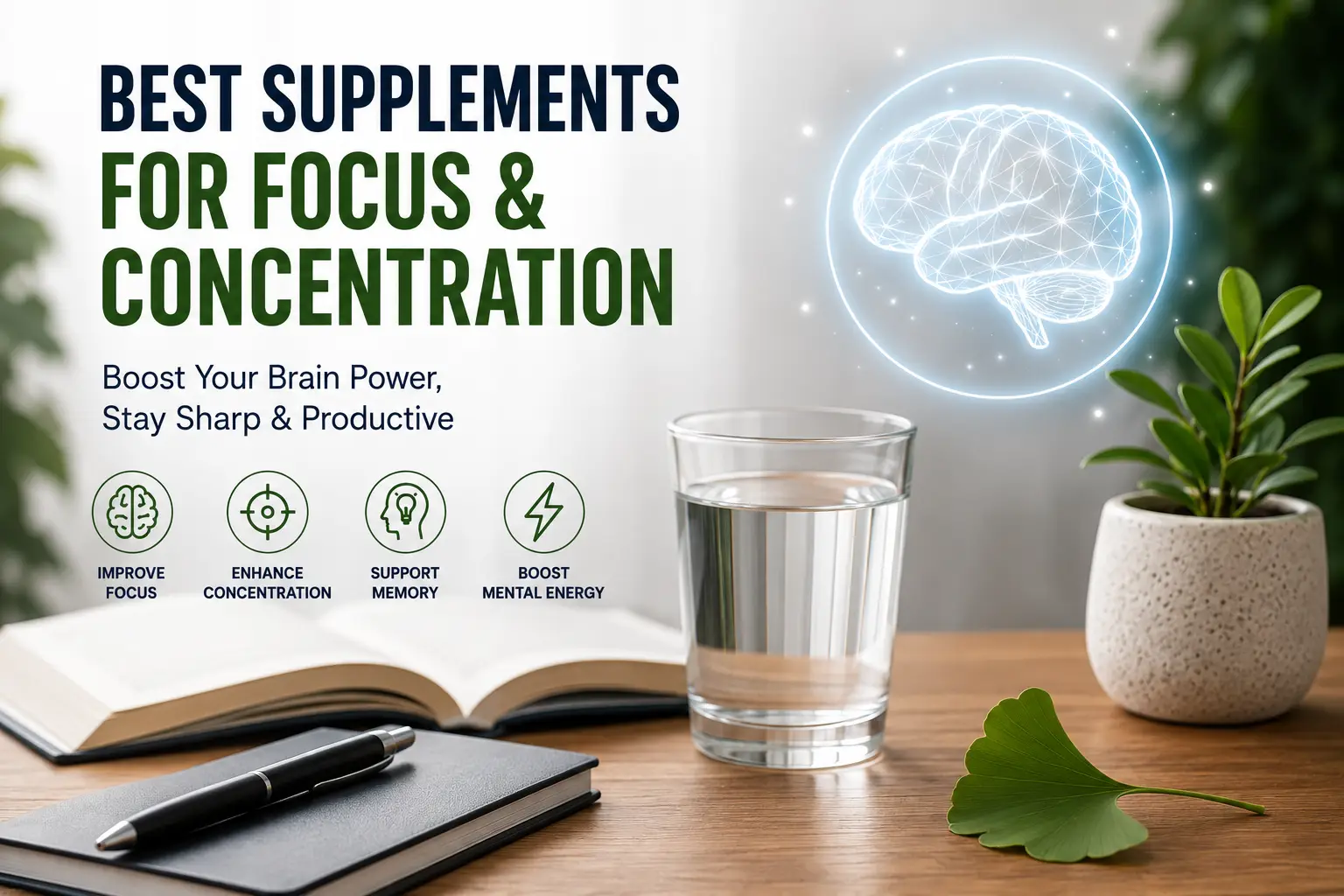
Best Supplements for Focus and Concentration – What Actually Works

Best Supplements for Focus and Concentration

You’ve tried the coffee. You’ve tried the productivity apps. You’ve rearranged your desk, blocked your notifications, and told yourself this afternoon would be different. And yet, three hours later, you’ve accomplished almost nothing.

If you struggle with focus and concentration – not occasionally, but regularly – the problem probably isn’t discipline. It might be biological.

Your brain needs specific nutrients to produce the neurotransmitters that drive attention. When those nutrients are missing or depleted, no amount of willpower can compensate. The internet is full of “nootropic stack” recommendations featuring exotic compounds most people have never heard of. But for the majority of people struggling with focus, the answer isn’t a trendy smart drug. It’s fixing the foundational gaps that are silently undermining their brain chemistry.

Here’s what the research actually supports – and what you can do about it today.

Why You Can’t Focus – The Biology Most People Miss

Before reaching for any supplement, it helps to understand what focus actually requires at the biological level.

Sustained attention depends on two neurotransmitters working together: dopamine and acetylcholine. Dopamine drives motivation and task initiation – it’s the reason you start working on something. Acetylcholine sustains attention and supports learning – it’s the reason you stay on task and absorb information.

When either of these is low, focus breaks down. Low dopamine feels like lack of motivation – you know what you should be doing but can’t make yourself start. Low acetylcholine feels like mental fog – you start tasks but can’t maintain concentration.

Here’s the part most supplement guides skip: these neurotransmitters don’t appear out of nowhere. They’re built from specific nutrients, influenced by your gut microbiome, and modulated by stress hormones. If any of these systems are off, your focus suffers – regardless of how many cups of coffee you drink.

This is why the most effective approach to focus isn’t adding a stimulant on top of a broken system. It’s supporting the systems that produce and regulate your attention chemistry in the first place.

1. The Gut-Brain Approach – PS128 for Dopamine and Serotonin

This is the supplement most focus guides don’t mention, because most people don’t associate gut health with concentration.

Your gut produces roughly 90% of your body’s serotonin and significantly influences dopamine production through the gut-brain axis – the communication pathway between your digestive system and your brain. When your gut microbiome is out of balance, neurotransmitter production suffers, and focus is one of the first casualties.

PS128 (Lactiplantibacillus plantarum PS128) is a psychobiotic – a probiotic strain that specifically modulates dopamine and serotonin pathways through the gut-brain connection. Clinical studies have shown it can reduce anxiety, improve mood stability, and support the neurological conditions that underpin sustained attention.

For focus specifically, PS128 works by addressing two common disruptors: stress-induced dopamine depletion and anxiety-driven distraction. When you’re chronically stressed, cortisol suppresses dopamine production – which is why stressed people struggle with motivation and task initiation. PS128 has been shown to reduce cortisol levels (through its companion strain PS23 in the Multibiotics Active formulation), creating a calmer neurochemical environment where focus happens naturally.

This isn’t a quick-hit stimulant effect. PS128 typically takes 2-4 weeks of consistent daily use before focus improvements become noticeable. But unlike caffeine, which borrows energy from later and leaves you crashed, the improvement is sustainable because you’re supporting the underlying biology rather than overriding it.

Who benefits most: People whose focus problems are linked to stress, anxiety, mood instability, or gut issues. If you notice your concentration is worst when you’re stressed or anxious, this is where to start.

2. Omega-3 DHA – The Brain’s Structural Building Block

If PS128 supports the chemistry of focus, DHA supports the hardware.

DHA (docosahexaenoic acid) is an omega-3 fatty acid that makes up roughly 25% of the fat in your brain’s cerebral cortex – the region responsible for attention, memory, and complex thinking. Your brain needs a constant supply of DHA to maintain the fluidity and function of its cell membranes, which directly affects how efficiently neurons communicate with each other.

When DHA levels drop, neural communication slows down. The subjective experience is brain fog, difficulty concentrating, poor memory recall, and a general sense of mental sluggishness.

A systematic review published in 2014 found that omega-3 supplementation, particularly DHA-rich formulations, produced significant improvements in attention and processing speed. In children, the evidence is even stronger – DHA supplementation has been shown to improve focus, reduce impulsivity, and add measurable improvements to sleep quality in children with attention difficulties.

Efamol Efalex Brain Formula is specifically designed for cognitive function, delivering a high-DHA formulation along with GLA (an omega-6 fatty acid that supports anti-inflammatory brain health). The combination of DHA and GLA in balanced proportions is backed by over 30 years of Efamol research into essential fatty acids and brain function.

Who benefits most: Students, anyone experiencing brain fog, children with attention or learning difficulties, and adults over 50 concerned about cognitive decline. If your focus issues feel more like mental sluggishness than stress-driven distraction, DHA is your priority.

3. Magnesium – The Deficiency Behind Your Brain Fog

Magnesium is involved in over 300 enzymatic reactions in your body, including the production of neurotransmitters essential for focus. It also regulates NMDA receptors – the brain’s primary excitatory receptors – which directly influence attention, learning, and memory formation.

The problem is that magnesium deficiency is remarkably common, especially in Singapore. Stress depletes magnesium. Processed food provides very little of it. And if you exercise regularly, you lose additional magnesium through sweat – a particular concern in Singapore’s tropical climate.

Common signs of magnesium deficiency that directly affect focus include difficulty concentrating, mental fatigue even after adequate sleep, heightened stress response (which further depletes dopamine), poor sleep quality (which impairs next-day concentration), and muscle tension or restlessness that makes it hard to sit still and work.

Magnesium bisglycinate is the most effective form for cognitive support because it crosses the blood-brain barrier more readily than other forms like magnesium oxide or citrate. It’s also gentle on the stomach, which matters for consistent daily use.

For people who also struggle with sleep – which is one of the biggest indirect causes of poor focus – combining oral magnesium bisglycinate with topical magnesium sleep lotion before bed addresses both problems simultaneously: better sleep tonight, better focus tomorrow.

Who benefits most: People who feel mentally tired despite sleeping enough, those under chronic stress, frequent exercisers, and anyone whose focus issues come with muscle tension, restlessness, or poor sleep.

4. Vitamin D – The Hidden Cognitive Factor

Most people associate vitamin D with bone health. But vitamin D receptors are found throughout the brain, particularly in areas responsible for memory formation, attention, and executive function.

Research consistently shows that vitamin D deficiency is associated with impaired cognitive performance, increased brain fog, and higher rates of depression – all of which undermine focus. What makes this particularly relevant for Singapore is that despite living in the tropics, 40% of Singaporeans are vitamin D deficient due to indoor lifestyles, sunscreen use, and limited direct sun exposure.

If you work in an office, commute underground, and spend your leisure time in air-conditioned environments – which describes most working adults in Singapore – there’s a meaningful chance your vitamin D levels are insufficient, and this could be contributing to your focus difficulties without you realising it.

The BetterYou Vitamin D3 3000IU + K2 Oral Spray delivers vitamin D through buccal absorption (sprayed inside the cheek) for superior bioavailability. The K2 ensures calcium goes to your bones rather than your arteries – an important safety pairing that many standalone vitamin D supplements miss.

Who benefits most: Office workers, anyone who spends most of their day indoors, people experiencing unexplained brain fog or low mood alongside focus issues.

5. B Vitamins – The Energy Behind Neural Processing

Your brain consumes roughly 20% of your body’s total energy despite being only 2% of your body weight. B vitamins – particularly B6, B9 (folate), and B12 – are essential cofactors in the energy production pathways that fuel this metabolic demand.

B12 deficiency in particular causes measurable cognitive impairment: difficulty concentrating, memory problems, and mental fatigue. It’s more common than most people realise, especially among vegetarians, older adults, and anyone with digestive issues that impair absorption.

Metabolics Active B Complex provides methylated B vitamins – the bioactive forms your body can use directly without needing to convert them. This is important because a significant portion of the population has genetic variations (MTHFR polymorphisms) that reduce their ability to convert standard B vitamins into usable forms.

Who benefits most: Vegetarians and vegans (B12 comes primarily from animal sources), older adults, people with digestive issues, and anyone experiencing mental fatigue alongside focus problems.

What About Trendy Nootropics?

You might be wondering about the ingredients dominating nootropic marketing: citicoline, L-theanine, lion’s mane mushroom, bacopa monnieri, rhodiola rosea. These are legitimate compounds with varying levels of research support.

But here’s the important distinction: most of these work best when your foundational nutrition is already covered. Taking citicoline while your DHA is depleted, your magnesium is low, your gut microbiome is imbalanced, and your vitamin D is insufficient is like upgrading your car’s stereo when the engine needs oil.

Fix the foundations first. If you’re still struggling with focus after addressing gut health, omega-3 status, magnesium, vitamin D, and B vitamins, then exploring targeted nootropic compounds makes sense as a next step.

Building Your Focus Stack – Where to Start

Don’t try everything at once. Identify your primary symptom pattern and start there:

“I can’t start tasks – I feel unmotivated and procrastinate” This suggests dopamine insufficiency. Start with PS128 for gut-brain dopamine support. Add magnesium bisglycinate if stress is a major factor.

“I start tasks but can’t maintain concentration – everything feels foggy” This suggests structural or nutritional gaps. Start with Efamol Efalex for DHA and check your vitamin D levels.

“I can focus sometimes but stress and anxiety derail me” This suggests cortisol-driven focus disruption. Start with PS128 + PS23 (Multibiotics Active) for combined stress hormone management and gut-brain support.

“My child struggles with focus and attention at school” Start with DHA supplementation through Efalex Brain Formula liquid (designed for children). Consider adding PS128 if stress or behavioural factors are also present.

Browse the full range of mental wellbeing supplements and brain health vitamins to find the right fit for your specific needs.

Frequently Asked Questions

What is the best supplement for focus and concentration?

It depends on the underlying cause. For stress-related focus issues, PS128 psychobiotic addresses the gut-brain connection that drives dopamine production. For general brain fog, omega-3 DHA and magnesium bisglycinate are the most research-backed options. Most people benefit from addressing multiple foundational nutrients rather than relying on a single supplement.

How long do focus supplements take to work?

Magnesium and vitamin D can show effects within 1-2 weeks. PS128 psychobiotic typically takes 2-4 weeks for noticeable improvements. Omega-3 DHA requires 4-8 weeks of consistent daily use before cognitive benefits become apparent. Caffeine works immediately but doesn’t address underlying causes.

Are focus supplements safe for students in Singapore?

The supplements discussed in this guide – omega-3 DHA, magnesium, vitamin D, and B vitamins – have strong safety profiles and are suitable for students when taken at recommended doses. PS128 has been studied in children and young adults. Always consult a healthcare professional before starting any supplement, particularly for children under 13.

Can I take focus supplements with coffee?

Yes. These supplements work on different pathways than caffeine. In fact, magnesium may help reduce the jitteriness and crash that coffee causes, while PS128 supports the dopamine pathway that caffeine temporarily stimulates. They complement rather than compete with moderate caffeine intake.

Posted on — Leave a comment

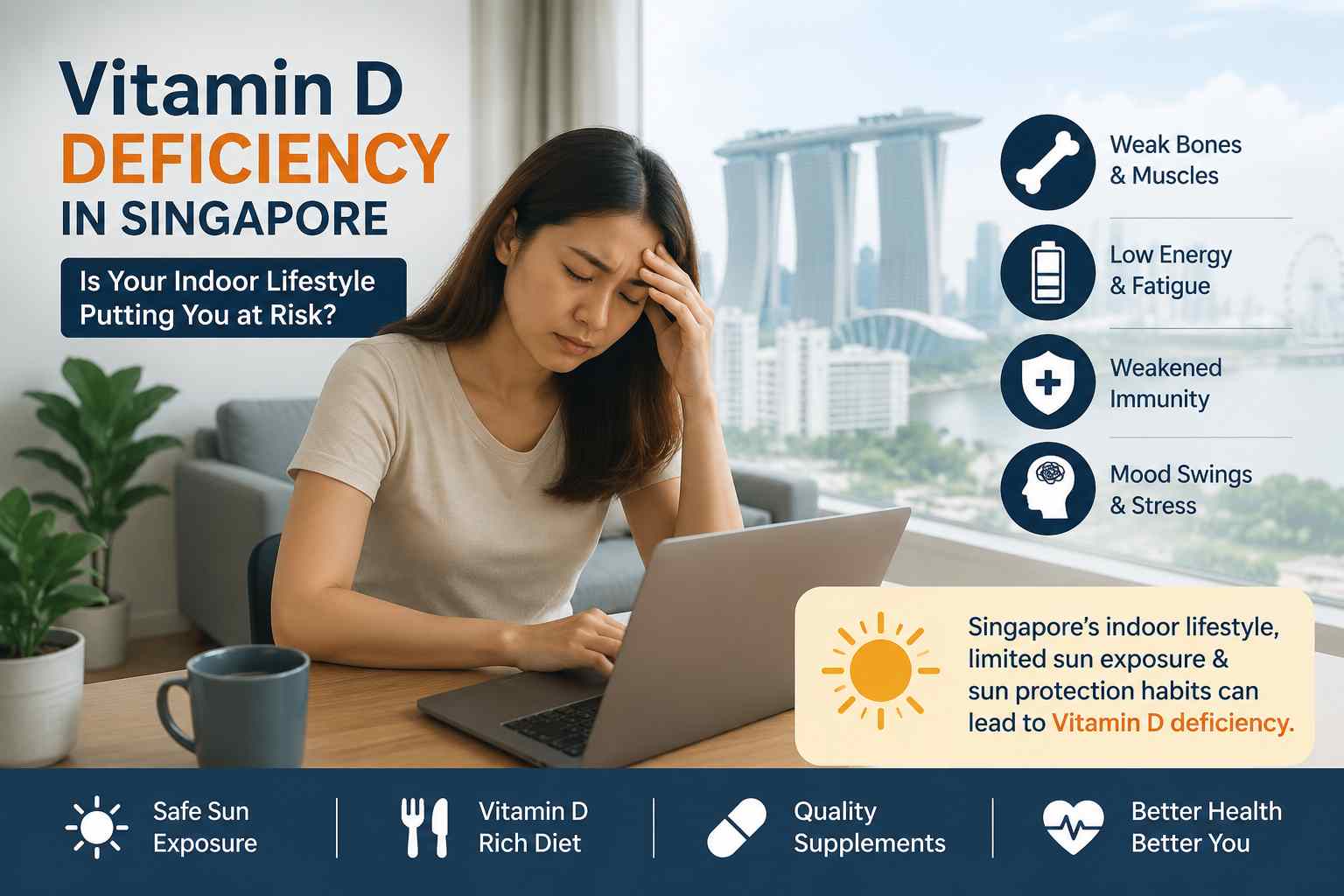
Are You Low on Vitamin D? Why Singapore’s Indoor Lifestyle Is a Hidden Risk

Vitamin D deficiency

Singapore sits one degree north of the equator. The sun shines year-round. Surely vitamin D deficiency is the last thing anyone here needs to worry about.

And yet, according to Singapore’s Ministry of Health, 40% of Singaporeans are vitamin D deficient. An additional 8% are very deficient. At KK Women’s and Children’s Hospital, researchers found that only 2.2% of pregnant women in their first trimester had sufficient vitamin D levels. Among elderly Singaporeans admitted with hip fractures, the deficiency rate climbs to 57.5%.

In a country with 12 hours of sunlight every single day, nearly half the population doesn’t have enough vitamin D. That’s not a nutrition problem — it’s a lifestyle problem. And if you’re reading this in an office, an air-conditioned mall, or on the MRT, it probably applies to you too.

Why Singapore Has a Vitamin D Problem Despite All That Sunshine

The explanation is simple once you think about it: Singaporeans don’t spend enough time in the sun.

The average working adult in Singapore wakes up, commutes in a covered vehicle or underground MRT, works in an air-conditioned office for 8-10 hours, eats lunch in a food court or mall, commutes home, and spends the evening indoors. On weekends, leisure time often happens in shopping centres, cinemas, or indoor gyms.

Your skin can only produce vitamin D when it’s directly exposed to UVB rays from sunlight. Glass windows block UVB. Sunscreen (which everyone in Singapore rightly uses) blocks it too. Even if you walk outside for 15 minutes during lunch, if you’re wearing long sleeves and sunscreen — which is sensible in Singapore’s UV conditions — your skin isn’t producing meaningful amounts of vitamin D.

Then there’s Singapore’s heat. It’s simply too hot and humid for most people to spend extended time outdoors during peak sun hours (10am to 3pm). Unlike countries with mild summers where people naturally spend hours outside, Singapore’s climate actively drives people indoors — which is exactly where vitamin D production stops.

The Health Promotion Board recommends 5 to 30 minutes of direct sun exposure on exposed skin at least twice a week. But honestly, how many Singaporeans consistently do this?

What Vitamin D Actually Does in Your Body

Vitamin D isn’t just about bones — though that’s what it’s most known for. It functions more like a hormone than a vitamin, influencing systems throughout your body.

Bone health and calcium absorption. Without adequate vitamin D, your body can only absorb about 10-15% of the calcium you eat. With sufficient vitamin D, that jumps to 30-40%. This is why vitamin D deficiency is strongly linked to osteoporosis and fractures, particularly in Singapore’s ageing population.

Immune function. Vitamin D activates your immune system’s T-cells — the cells that identify and destroy pathogens. Research during the pandemic highlighted that people with low vitamin D levels had significantly worse outcomes, prompting renewed attention to this nutrient worldwide.

Mood and mental health. Vitamin D receptors are found throughout the brain, including areas that regulate mood. Low vitamin D has been consistently associated with higher rates of depression and anxiety. If you’re feeling persistently low despite no obvious cause, your vitamin D levels are worth checking. This connects to the broader gut-brain approach to mental wellbeing — vitamin D also influences your gut microbiome, which in turn affects neurotransmitter production.

Muscle function. Vitamin D deficiency causes muscle weakness and increases fall risk — a serious concern for older adults. Maintaining adequate levels supports muscle strength and coordination, which is equally relevant for active individuals and athletes.

Children’s development. For growing children, vitamin D is essential for bone development, immune maturation, and potentially cognitive function. The KKH study finding that almost no pregnant women had sufficient vitamin D means many babies are starting life with depleted stores — making supplementation from age one onwards particularly important.

Who Is Most at Risk in Singapore?

While the general deficiency rate is 40%, certain groups are at even higher risk.

Office workers who commute covered and work indoors all day — which describes the majority of Singapore’s workforce.

Pregnant and breastfeeding women. The KKH data is alarming: 49.5% insufficient, and only 2.2% sufficient. Babies depend entirely on maternal vitamin D stores, and breast milk alone doesn’t provide adequate amounts.

Elderly Singaporeans. Ageing skin produces less vitamin D from sunlight, and older adults tend to spend more time indoors. Combined with reduced dietary intake, this creates a compounding deficiency that accelerates bone loss and increases fracture risk.

Children and teenagers. Between school, homework, screen time, and air-conditioned environments, many Singapore children get minimal sun exposure. This is the age when bone density is being built for life.

People with darker skin tones. Melanin reduces the skin’s ability to produce vitamin D from sunlight. Singapore’s multi-ethnic population includes many individuals with higher melanin levels who require more sun exposure to produce the same amount of vitamin D.

Anyone using sunscreen regularly. SPF 30 reduces vitamin D production by about 95%. Sunscreen is absolutely necessary in Singapore — but it does mean you can’t rely on incidental sun exposure for your vitamin D.

How to Fix It – The Practical Approach

There are three sources of vitamin D: sunlight, food, and supplements. In Singapore, the first two are usually insufficient on their own.

Sunlight – Helpful but Limited

The HPB recommendation of 5-30 minutes of direct sun exposure twice a week is sound advice. The practical challenge is doing it consistently in Singapore’s climate. Early morning (before 10am) or late afternoon (after 4pm) sun is less intense and more tolerable, but also produces less vitamin D.

If you can build a short outdoor walk into your morning routine — even 15 minutes without sunscreen on your arms and face — it helps. But for most Singaporeans, this alone won’t be enough to maintain optimal levels.

Food – A Contribution, Not a Solution

Vitamin D occurs naturally in very few foods. Fatty fish (salmon, mackerel, sardines), egg yolks, and some mushrooms contain moderate amounts. Fortified milk and cereals add small quantities.

The problem is volume. You’d need to eat fatty fish almost daily to approach adequate vitamin D intake through food alone. For most people, diet contributes to your vitamin D status but doesn’t solve deficiency by itself.

Supplementation – The Most Reliable Approach

For Singaporeans, supplementation is the most practical and reliable way to maintain adequate vitamin D levels. But there are important choices to make.

Vitamin D3 over D2. Vitamin D3 (cholecalciferol) is the form your skin naturally produces and is more effective at raising blood levels than D2 (ergocalciferol). Always choose D3.

Take K2 with your D3. This is the detail most people miss. Vitamin D increases calcium absorption – but without vitamin K2, that calcium can deposit in your arteries instead of your bones. K2 directs calcium to where it belongs: your skeleton.

The BetterYou Vitamin D3 3000IU + K2 Oral Spray delivers both nutrients in a single spray. It uses buccal absorption — sprayed inside the cheek, the nutrients absorb directly into the bloodstream, bypassing the digestive system. Research conducted with Cardiff University has shown this method provides clinically proven superior absorption compared to tablets.

For children aged 1-13, the BetterYou Vitamin D3 + K2 Kids Oral Spray provides an age-appropriate 800IU dose in a sugar-free bubblegum and blueberry flavour. No pills to swallow, no sugar, no fuss — just one spray inside the cheek.

Why spray instead of tablets? Three reasons. First, absorption is clinically proven to be superior through the buccal membrane. Second, many Singaporeans already take multiple supplements – adding another tablet contributes to pill fatigue. A spray takes two seconds. Third, for children and elderly adults who struggle with swallowing pills, a spray removes the barrier entirely.

The Magnesium Connection Most People Don’t Know About

Here’s something your doctor might not mention: your body needs magnesium to convert vitamin D into its active form. If you’re magnesium deficient — which is common, especially in stressed or active individuals — taking vitamin D alone may not fully solve the problem because your body can’t activate it properly.

This is why many nutrition-aware practitioners recommend taking magnesium alongside vitamin D. Magnesium bisglycinate is the most absorbable oral form, and it also supports sleep quality and stress management – benefits that compound with adequate vitamin D levels.

Similarly, vitamin D is fat-soluble, meaning it absorbs best when taken with dietary fat. Omega-3 supplements provide healthy fats that support vitamin D absorption while delivering their own brain health and anti-inflammatory benefits — a natural pairing.

When to Get Tested

If you recognise yourself in the risk factors above – indoor lifestyle, limited sun exposure, regular sunscreen use, darker skin tone – it’s worth getting your vitamin D levels checked. A simple blood test measuring 25-hydroxyvitamin D (25-OH-D) will tell you where you stand.

Levels below 50 nmol/L are considered deficient. Between 50-75 nmol/L is insufficient. Above 75 nmol/L is considered adequate, with many experts recommending levels above 100 nmol/L for optimal health.

Your GP can order this test, or you can request it at most health screening clinics in Singapore. Given that 40% of the population is deficient, it’s not an unusual request.

The Counter-Intuitive Truth

Living in one of the sunniest countries on earth doesn’t protect you from vitamin D deficiency. Singapore’s indoor lifestyle, combined with necessary sun protection habits, creates a gap that sunshine alone can’t fill.

The good news is that it’s one of the easiest deficiencies to fix. A daily spray that takes two seconds, combined with awareness of the co-nutrients that support it – K2 for calcium direction, magnesium for activation, healthy fats for absorption – can bring your levels into the optimal range within weeks.

Your bones, muscles, immune system, and mood will thank you. And you won’t even need to stand in Singapore’s midday sun to get there.

Posted on — 1 Comment

Best Supplements for Runners in Singapore – Before, During and After

Best supplements runners in singapore

Singapore is a city that runs. Between the Kent Ridge Hill Run in August, Garmin Run Asia, and the massive BYD Singapore International Marathon in December that draws over 55,000 runners, there’s always a race to train for. And if you’re not racing, you’re still lacing up for a 6am loop around MacRitchie, an evening session at East Coast Park, or a weekend long run through Gardens by the Bay.

But here’s what most recreational runners in Singapore get wrong about nutrition: they focus almost entirely on what they eat at meals, and barely think about targeted supplementation — the specific nutrients that directly affect how they perform and recover.

Running in Singapore’s heat and humidity makes this even more important. You lose more electrolytes through sweat, your muscles fatigue faster in the heat, and recovery takes longer when your body is fighting both exercise stress and environmental stress at the same time.

This guide breaks down what supplements actually help runners — organised by when you need them: before, during, and after your run.

Before Your Run – Fuelling for Performance

What you take before a run determines how much energy you have, how long you can sustain your pace, and whether you hit the wall at kilometre 15 or push through to the finish.

Beetroot Shots for Endurance

This is one of the most well-researched performance supplements in sports science, and it’s surprisingly underused among Singapore runners.

Beetroot is naturally rich in dietary nitrate, which your body converts to nitric oxide — a molecule that widens blood vessels, improves blood flow, and allows your muscles to use oxygen more efficiently. In practical terms, this means you can maintain a faster pace with less perceived effort.

Studies show that taking a concentrated beetroot shot 2-3 hours before exercise can improve endurance by 1-3% — which might sound small, but over a half marathon, that’s several minutes.

Beet It Organic Beetroot Shots deliver a standardised dose of dietary nitrate in a convenient 70ml shot. They also come in ginger and turmeric variants — the turmeric version adds an anti-inflammatory benefit, which is useful for runners dealing with joint stress from high mileage.

Creatine for Power and Speed

Creatine isn’t just for bodybuilders. For runners, it supports high-intensity efforts — hill repeats, tempo runs, sprint finishes, and the mental push through the last few kilometres of a race.

Creatine works by replenishing ATP (your muscles’ immediate energy source) faster during short, intense efforts. It also supports muscle hydration, which is particularly relevant in Singapore’s tropical climate where dehydration accelerates fatigue.

Etixx Creatine 3000 uses Creapure — the purest form of creatine monohydrate available — and includes glutamine and taurine for additional recovery support. Take it daily (not just before runs) for best results, as creatine works through consistent loading rather than single doses.

Pre-Run Nutrition Timing

A common mistake: eating too close to your run, especially in Singapore’s heat. Your body diverts blood to your digestive system to process food, leaving less available for your working muscles. In humid conditions, this effect is amplified.

Eat a proper meal 2-3 hours before running. If you need something closer to your run (within 60 minutes), stick to easily absorbed options — a banana, a small energy bar, or a Justine’s Protein Cookie which provides sustained energy without sitting heavy in your stomach.

During Your Run – Sustaining Energy

For runs under 60 minutes, water is usually sufficient. But for anything longer — long runs, half marathons, full marathons — you need to replace carbohydrates and electrolytes while running.

Energy Gels – Your Portable Fuel

Energy gels are the most practical mid-run fuel because they’re compact, fast-absorbing, and don’t require chewing. But not all gels are created equal.

What makes a good energy gel for Singapore runners:

High carbohydrate content. More carbs per gel means fewer gels needed during a race. The Etixx Pro Line Energy Gel delivers 50g of carbohydrates per serving — roughly double what most competitors offer. This means fewer stops, less gut disruption, and more consistent energy.

Optimised glucose-to-fructose ratio. Your gut can only absorb about 60g of glucose per hour. But if you add fructose (which uses a different absorption pathway), you can absorb up to 90g of carbs per hour. Etixx uses a 1:0.8 glucose-to-fructose ratio, which is the current gold standard in sports nutrition research.

Caffeine option. For races and key training sessions, the caffeine version of Etixx Energy Gels provides 80mg of caffeine — enough to sharpen focus and reduce perceived exertion without causing jitters. Save caffeinated gels for the second half of your race when mental fatigue sets in.

Sodium. Singapore runners lose significantly more sodium through sweat than runners in cooler climates. The Etixx gels contain 200mg of sodium per serving, helping maintain electrolyte balance during long efforts.

Timing: Take your first gel 30-45 minutes into a long run, then every 30-45 minutes after that. Don’t wait until you feel depleted — by then, it’s too late for the gel to catch up with your energy demand.

After Your Run – Recovery Is Where the Gains Happen

This is where most Singapore runners under-invest. You finished your run, you stretched, maybe you had a protein shake. But real recovery goes deeper than that.

Cherry Recovery Shots for Muscle Soreness

If you’ve ever woken up the day after a long run with legs that feel like concrete, you’ve experienced DOMS (Delayed Onset Muscle Soreness). It’s caused by microtrauma in your muscle fibres — a normal part of training, but one that can be managed.

Tart cherry is one of the most researched natural anti-inflammatories for exercise recovery. The anthocyanins in tart cherries reduce oxidative stress and inflammation, helping your muscles repair faster and reducing the severity of DOMS.

Beet It Regen Cherry+ Shots combine tart cherry with beetroot, giving you both the recovery benefits of cherry and the circulation-boosting effects of beetroot nitrate. Take one within 30 minutes of finishing your run for optimal absorption.

This is particularly important for runners doing back-to-back training days or preparing for a race — reducing inflammation today means better quality training tomorrow.

Magnesium – The Mineral Runners Burn Through

Every time you run, you deplete magnesium through sweat and muscle contraction. In Singapore’s humidity, you’re sweating significantly more than runners in temperate climates, which means your magnesium losses are higher.

Low magnesium leads to muscle cramps, poor sleep quality, and slower recovery — all things that directly impact your next run.

Two approaches work well together:

Immediately after running: Apply BetterYou Magnesium Gel directly to your legs. It’s a concentrated transdermal magnesium that provides targeted relief to the muscles you just worked. The gel format delivers sustained release, and you’ll feel the tension release within minutes.

Daily maintenance: Take Magnesium Bisglycinate capsules to maintain systemic magnesium levels. Bisglycinate is the most absorbable oral form and is gentle on your stomach — important for runners who already deal with GI sensitivity.

HMB for Muscle Protection

If you’re running high mileage (40km+ per week), your body is constantly breaking down and rebuilding muscle tissue. HMB (Beta-Hydroxy Beta-Methylbutyrate) helps tip that balance toward building rather than breaking down.

Etixx HMB 1000 is specifically designed for endurance athletes who need anti-catabolic support — meaning it helps prevent the excessive muscle breakdown that comes with high training volumes. Take it daily during heavy training blocks for best results.

The Recovery Factor Most Runners Overlook – Your Gut

Here’s something that might surprise you: your gut health directly affects your recovery speed. Running — especially long runs and races — causes significant stress on your digestive system. Blood flow is diverted away from your gut to your muscles, core temperature rises, and the physical impact of running can cause intestinal permeability (what runners sometimes call “runner’s gut”).

This gut stress triggers an inflammatory response that competes with your muscle recovery process. If your gut is inflamed, your body prioritises healing the gut over repairing your muscles — which means slower recovery.

This is where psychobiotics become relevant. PS128 and PS23 are two probiotic strains that work on the gut-brain axis — the communication pathway between your digestive system and your nervous system.

PS128 modulates dopamine and serotonin pathways, supporting mood and reducing the mental fatigue that accumulates during heavy training. PS23 has been clinically shown to reduce cortisol levels — the stress hormone that, when chronically elevated, breaks down muscle tissue and impairs recovery.

Together, they address recovery from the inside out: calming gut inflammation, lowering stress hormones, and supporting the neurological conditions for physical repair. You can read more about how PS128 and PS23 support recovery in our detailed guide.

Building Your Runner’s Supplement Stack

You don’t need everything on this list from day one. Build gradually based on where you feel the biggest gap:

If you run out of energy mid-run: Start with energy gels and beetroot shots for pre-run fuelling.

If recovery is your bottleneck: Start with cherry recovery shots and magnesium.

If you’re training for a specific race: Add creatine for performance and HMB for muscle protection during your build-up phase.

If everything feels harder than it should: Consider whether gut health and stress are undermining your training – PS128 + PS23 addresses this foundation.

Browse the full range of sports and fitness supplements and recovery products to find what fits your training.

FAQ

A beetroot shot 2-3 hours before for endurance, and an energy gel 15 minutes before the start for immediate fuel. If you use creatine, take it daily in the weeks leading up to the race, not just on race day.

Magnesium depletion and sodium loss are the primary causes. Use energy gels with sodium during your run, apply magnesium gel to your legs after, and take magnesium bisglycinate daily to maintain baseline levels.

Look for gels with a balanced glucose-to-fructose ratio (like Etixx’s 1:0.8), which uses dual absorption pathways and reduces GI distress. Train with gels during your long runs so your gut adapts before race day – never try a new gel on race morning.

A balanced diet covers your baseline nutritional needs. But running – especially in Singapore’s climate – creates demands that food alone struggles to meet in real-time: rapid energy delivery mid-run, accelerated electrolyte replacement, targeted anti-inflammatory support, and gut-brain recovery that goes beyond what a protein shake provides.

Posted on — 6 Comments

Our Commitment to Safety Recognised by the Workplace Safety & Health Council

We’re proud to share that WellbeingSG has been officially recognised by Singapore’s Workplace Safety and Health (WSH) Council with a BizSAFE certification. But beyond the badge on our wall, we want to explain what this actually means for you our customer and why it matters when you’re buying health supplements online in Singapore.

What is BizSAFE?

BizSAFE is a nationally recognised programme by Singapore’s Workplace Safety and Health Council, developed in collaboration with the Ministry of Manpower (MOM). It was created to help enterprises build up their workplace safety and health capabilities through a structured, five-level framework.

The five levels progress from a top management commitment at Level 1, through risk management planning at Level 2, implementation at Level 3, and audited WSH management systems at Levels 4 and 5 (Star). Each level requires the enterprise to demonstrate increasingly higher standards of safety performance, risk assessment, and continuous improvement.

When a company achieves BizSAFE status, it signals that the organisation has met nationally benchmarked safety standards — not just once, but as part of an ongoing commitment.

Why Should You Care About BizSAFE When Buying Supplements?

You might wonder: what does workplace safety have to do with the supplements I’m taking?

The answer is everything.

Health supplements are products you put into your body. The way they are stored, handled, packed, and shipped directly affects their quality and safety. A supplement that sits in an improperly ventilated warehouse, or gets handled without proper safety protocols, may not deliver what the label promises.

Our BizSAFE certification means that every step of our operation — from receiving stock from our international brand partners, to storing products in controlled conditions, to packing and dispatching your order — follows documented safety procedures that have been assessed against national standards.

Here’s what this looks like in practice at WellbeingSG:

Proper storage conditions: Our health supplements, including temperature-sensitive products like probiotics and omega-3 oils, are stored according to manufacturer specifications. This ensures potency and shelf life are maintained until your order reaches your door.

Safe handling procedures: Every team member involved in our fulfilment process follows established protocols for handling health products. This minimises the risk of contamination, damage, or errors during packing.

Risk assessment and management: We conduct regular risk assessments across our operations, identifying potential hazards and implementing controls before they become problems. This is a core requirement of the BizSAFE framework.

Continuous improvement: BizSAFE isn’t a one-time achievement. It requires ongoing commitment from top management and regular reviews of our safety management system. We don’t just meet the standard — we work to exceed it.

Our Commitment Goes Beyond Certification

At WellbeingSG, safety and quality aren’t just about passing an audit. They’re built into how we select the brands we carry and the products we recommend.

Every brand in our catalogue — from Activhealth’s clinically tested probiotics to Etixx’s sports nutrition range to Efamol’s omega-3 supplements — is chosen based on clinical evidence, manufacturing standards, and third-party certifications. Many of our products carry additional certifications such as Informed Sport (banned substance tested), GMP (Good Manufacturing Practice), and Halal certification.

Combined with our BizSAFE-certified operations, this means you’re getting supplements that are not only evidence-based in their formulation but also handled with care from warehouse to doorstep.

What This Means for Practitioners and Retailers

For the healthcare practitioners and retailers who work with us, our BizSAFE certification provides an added layer of assurance. When you recommend or stock WellbeingSG products, you can be confident that the supply chain behind those products meets nationally recognised safety standards.

If you’re a practitioner interested in partnering with us, visit our Practitioner Account page to learn more.

Trust, Transparency, and Your Wellbeing

In a market where supplement quality can vary widely, certifications like BizSAFE help distinguish companies that take safety seriously from those that don’t. We believe you deserve to know exactly what goes into your supplements — and that the company behind them operates with the same level of care.

Whether you’re shopping for mental wellbeing supplements, digestive health products, or sports nutrition, every order from WellbeingSG is backed by our commitment to safety, quality, and transparency.

Have questions about our safety practices or certifications? Get in touch with us, we’re always happy to share.

Posted on — Leave a comment

How to Spot Fake Supplements in Singapore: A Guide to Buying Genuine Products

Have you ever come across a health supplement online that seemed too cheap to be real? You’re not alone. In Singapore, unusually low-priced supplements are appearing more frequently on unofficial platforms – and while the savings may look tempting, the risks are real.

In this guide, we’ll explain how to identify counterfeit or diverted supplements, why pricing that looks too good to be true usually is, and what you can do to make sure you’re buying genuine, quality-assured products.

Why Are Fake or Diverted Supplements a Problem?

Not all supplement sellers source their products directly from manufacturers. Some operate through grey market channels – buying stock from third-party wholesalers, consolidators, or international resellers who may not follow proper storage, handling, or transportation standards.

This matters because health supplements are sensitive products. Probiotics need cold chain management. Omega oils degrade when exposed to heat. Vitamins lose potency over time if stored incorrectly. Even if a diverted product is technically “genuine,” there is no guarantee that it has been handled properly once it leaves the manufacturer’s authorised supply chain.

The result? You might be taking a supplement that looks right on the outside but has already lost its effectiveness – or worse, has been contaminated or tampered with.

How to Identify Genuine Supplements: 5 Warning Signs

Before purchasing any health supplement online, look out for these red flags:

1. Price is significantly lower than retail If a product is being sold at 30–50% below the official retail price, ask yourself why. Authorised distributors have agreed pricing structures with manufacturers. A dramatically lower price usually means the product has been sourced through unofficial channels.

2. Seller has no verifiable relationship with the brand Check the brand’s official website for a list of authorised distributors or retailers. If the seller isn’t listed, the product may not come with any quality guarantee.

3. Missing or inconsistent packaging Look for signs of repackaging — mismatched labels, missing batch numbers, no expiry date, or packaging that looks different from what’s shown on the brand’s official site.

4. No after-sales support or product information Authorised sellers can answer questions about dosage, ingredients, interactions, and storage. If the seller can’t provide this information, that’s a concern – especially for supplements used alongside medication or recommended by healthcare professionals.

5. Sold through marketplace accounts with no brand affiliation Products listed by anonymous sellers on general marketplaces, without any brand endorsement or authorised dealer badge, carry higher risk. This is especially true when the same seller offers products across dozens of unrelated categories.

Official Statement from Wassen International

This isn’t just our perspective. Wassen International — the UK-based manufacturer of clinically researched supplements – has issued an official statement addressing this issue directly.

Wassen International has confirmed that heavily discounted Wassen products appearing through unofficial online channels are not arranged, approved, or endorsed by either Wassen International or its appointed distributor in Singapore, ActivHealth / WellbeingSG.

According to Wassen International, these unauthorised listings:

  • Undermine the role and investment of the official distributor
  • Create confusion around pricing and product availability
  • Raise legitimate concerns about supply chain integrity, particularly among healthcare professionals

Wassen International has stated that it actively works with its UK exporters and partners to prevent products from being diverted into markets where an appointed distributor already exists. When credible information about unauthorised reselling is received, the company investigates and takes appropriate action – including issuing formal warnings and revisiting supply terms.

However, Wassen International also acknowledges a practical reality: once products pass through multiple independent intermediaries – wholesalers, consolidators, and online marketplace sellers – it becomes difficult to trace or control individual shipments. This means there is no guarantee of how those products have been stored, transported, or handled.

Why We Can Guarantee What Others Cannot

As the officially appointed distributor for Wassen International in Singapore, WellbeingSG and ActivHealth operate within a verified, quality-assured supply chain. When you purchase Wassen products from us, you get:

Direct sourcing from the manufacturer Our stock comes directly from Wassen International through their approved supply chain – not through third-party wholesalers or grey market intermediaries.

Proper storage and handling We are BizSAFE certified by Singapore’s Workplace Safety and Health Council, which means our storage, handling, and fulfilment processes meet nationally benchmarked safety standards. Temperature-sensitive products are stored according to manufacturer specifications.

Full product support Our team can provide accurate product information, dosage guidance, and after-sales support. We work closely with healthcare professionals who recommend Wassen products to their patients, and we take that responsibility seriously.

Traceability Every product we sell can be traced back to its manufacturing batch. If you ever have a question about authenticity, we can verify it.

How This Applies Beyond Wassen

While this statement is specific to Wassen International, the same principle applies to every brand we carry at WellbeingSG,  from Activhealth probiotics to Efamol omega-3 supplements, Etixx sports nutrition, and Metabolics vitamins.

We are the authorised distributor for every brand on our platform. Every product comes through a verified supply chain, is stored under proper conditions, and is backed by full product support.

What to Do If You Suspect a Fake

If you come across a suspicious supplement listing, whether it’s a Wassen product or any other brand, here’s what you can do:

Reach out to us at WellbeingSG if you have questions about any product we carry – we’re always happy to help verify authenticitye you to reach out to ActivHealth directly. Together with Wassen International, we remain committed to supporting healthcare professionals and consumers with high-quality products delivered through trusted, authorised channels.

Check the brand’s official website for their list of authorised distributors in your region

Compare pricing against official retail prices – significant discounts are a warning sign

Contact the authorised distributor directly to verify the seller’s legitimacy

Report the listing to the marketplace platform if you believe it violates their seller policies

Posted on

I Tried Probiotics for My Anxiety and Here’s What Happened

Anxiety, Avocado Toast, and the Gut-Brain Connection

As a millennial, stress and anxiety have always been familiar companions. Balancing work, social pressures, and the elusive idea of self-care felt like an endless battle. My Instagram feed was full of friends promoting meditation apps, yoga sessions, and avocado toast brunches as cures for mental fog and emotional fatigue. But behind curated images, the daily reality was persistent anxiety and unpredictable moods. That’s when I stumbled upon something new: the gut-brain connection.

Discovering the Gut-Brain Axis: It’s More Than Just Yogurt

Initially, probiotics to me meant yogurt commercials or kombucha in fancy bottles. But deeper research led me to the term “psychobiotics,” probiotics that specifically influence mood and mental health. The idea that gut bacteria could influence my anxiety and stress levels intrigued me. Could this be the missing link in my mental health journey?

Gut Health 101: Understanding the Microbiome

The human gut is home to trillions of bacteria, fungi, and viruses, collectively known as the microbiome. These microbes do more than aid digestion—they produce neurotransmitters like serotonin and dopamine, regulate stress hormones like cortisol, and modulate inflammation. An imbalanced gut microbiome (dysbiosis) is increasingly linked to anxiety, depression, and mood swings.

Millennials and Mental Health: The Unspoken Epidemic

According to recent statistics, millennials report higher stress, anxiety, and depression levels compared to previous generations. Factors like financial insecurity, social media pressures, and chronic work stress play major roles. I was part of this statistic, frequently feeling overwhelmed and anxious without clear reasons.

My Experiment with PS128: A Promising Psychobiotic

After extensive research, one probiotic strain caught my attention—Lactiplantibacillus plantarum PS128. Originally isolated from fermented Taiwanese vegetables, PS128 was different due to its documented ability to affect neurotransmitter pathways and stress responses.

Scientific studies showed PS128’s potential benefits, including improved mood, reduced anxiety, and better sleep quality. Encouraged by clinical data and positive testimonials, I decided to give it a try.

Starting PS128: Skepticism and Small Changes

I started with a daily capsule containing PS128, pairing it with breakfast to form a habit. Initially, I felt skeptical. How could bacteria in a capsule significantly impact my mood? The first week passed uneventfully, but by the end of the second week, I noticed subtle shifts.

My sleep quality improved—fewer midnight awakenings and more restful mornings. My baseline anxiety felt less overwhelming. These weren’t miraculous changes, but they were noticeable and meaningful.

Science Behind PS128: Why it Works for Mood

Delving into research, I learned that PS128 acts on the gut-brain axis by increasing serotonin and dopamine levels in the brain. Animal studies demonstrated reduced stress hormones like cortisol and enhanced production of mood-stabilizing neurotransmitters. This scientific validation reassured my skeptical mind that my experiences weren’t just placebo effects.

Clinical Studies and Real-World Impact

Human clinical studies echoed my experience. A study involving stressed adults revealed PS128 significantly improved mood, anxiety, and sleep quality over eight weeks. Another trial with children facing anxiety and behavioral issues also reported significant improvements. The consistency across research and personal experience made PS128 feel increasingly credible and reassuring.

Probiotics in a Holistic Mental Health Routine

While PS128 was helpful, mental health demands a holistic approach. Alongside PS128, I incorporated regular physical activity, mindfulness meditation, and a balanced diet rich in fiber and nutrients that support gut health. These combined efforts amplified the positive effects of PS128, highlighting the power of holistic wellness.

Overcoming Stigma: Millennials and Mental Health Conversations

Discussing gut health and probiotics opened up new conversations with my friends about mental health. Millennials often normalize anxiety and burnout, rarely discussing actionable solutions. Sharing my journey helped break the stigma, encouraging others to consider gut health and psychobiotics as valuable tools in mental health management.

A Balanced Gut for a Balanced Life: Sustaining Positive Changes

Months into taking PS128, my mood felt significantly more balanced. I handled stress better, slept deeply, and experienced fewer anxious episodes. Maintaining gut health through PS128 became a cornerstone of my mental wellness routine, demonstrating the long-term value of gut-brain care.

Future of Gut-Brain Research: Hope for Millennial Mental Health

Ongoing research continues to validate psychobiotics like PS128 as promising tools for mental health. Future studies aim to further unravel the mechanisms behind gut-brain interactions, potentially paving the way for more personalized probiotic treatments.

Conclusion: A Personal Invitation to Explore Gut Health

My journey with PS128 taught me the profound connection between gut health and mental wellness. For millennials battling anxiety, stress, or emotional fatigue, exploring psychobiotics could offer valuable relief. It’s not a miracle cure but rather a vital piece of a holistic mental health puzzle.

I encourage fellow millennials to explore this innovative approach, embracing science-backed solutions like PS128 to enhance emotional well-being and resilience in our increasingly demanding world.

Posted on

Can Probiotics Help with Parkinson’s? What Research Says About PS128

When most people think of Parkinson’s disease, they think of tremors and movement difficulties. What many don’t realize is that Parkinson’s often begins not in the brain, but in the gut — sometimes years before the first visible symptoms appear.

This connection between gut health and brain function is opening up new possibilities for supporting people living with Parkinson’s. One area attracting growing attention from researchers is a specific probiotic strain called PS128, a psychobiotic that may help manage both the motor and non-motor symptoms of the disease.

In this article, we break down what the current clinical research says, in plain language, not medical jargon.

What Does the Gut Have to Do with Parkinson’s?

For decades, Parkinson’s disease was understood purely as a brain disorder caused by the loss of dopamine-producing neurons. But over the past ten years, research has revealed something surprising: the gut plays a much bigger role than anyone expected.

Many Parkinson’s patients experience digestive issues , particularly chronic constipation  years before they develop tremors or stiffness. Scientists now believe that changes in the gut microbiome (the community of bacteria living in your digestive tract) may contribute to the disease’s progression.

Here’s the simplified version of what researchers think happens: an imbalance in gut bacteria triggers inflammation in the gut lining. This inflammation may cause a protein called alpha-synuclein to misfold and clump together. These clumps can then travel from the gut to the brain via the vagus nerve, gradually damaging the neurons that produce dopamine.

This pathway,  from gut to brain — is called the gut-brain axis. And it’s the reason researchers are now asking whether supporting gut health through targeted probiotics could make a meaningful difference for Parkinson’s patients.

What is PS128 and Why is It Different?

Not all probiotics are the same. Most commercial probiotics are designed for general digestive health  reducing bloating, improving regularity, supporting immune function. PS128 is different.

PS128 (full name: Lactiplantibacillus plantarum PS128) was originally isolated from fermented Taiwanese vegetables and has been classified as a psychobiotic — a probiotic strain that specifically influences the gut-brain connection.

What makes PS128 unique is its ability to modulate neurotransmitter pathways, particularly dopamine and serotonin. Since Parkinson’s disease involves the progressive loss of dopamine-producing neurons, a probiotic that can influence dopamine signaling has obvious relevance.

PS128 has been the subject of multiple clinical studies across different conditions — from autism spectrum disorder to anxiety to stress management. But the research that’s generating the most interest right now is its application in Parkinson’s disease.

What Did the Clinical Trial Show?

The most significant study on PS128 and Parkinson’s to date was a pilot clinical trial (registered on ClinicalTrials.gov as NCT04389762) involving 25 patients with Parkinson’s disease.

Participants took PS128 daily for 12 weeks alongside their standard Parkinson’s medications. The results were encouraging across several measures.

Motor function improved. Patients showed significant improvements in motor symptoms as measured by standard Parkinson’s rating scales. Importantly, these improvements came on top of their existing medication — PS128 wasn’t replacing treatment, it was complementing it.

“ON” time increased. Parkinson’s patients often experience fluctuations between “ON” periods (when medication is working and symptoms are controlled) and “OFF” periods (when symptoms return). The trial showed that PS128 supplementation was associated with longer ON times, meaning patients experienced more hours of symptom relief during the day.

Quality of life got better. Participants reported improvements in their overall quality of life scores, which encompass physical function, emotional wellbeing, and daily activities.

Inflammation markers decreased. Blood tests showed reduced levels of inflammatory markers, supporting the theory that PS128 works partly by calming gut-related inflammation that contributes to neurodegeneration.

It’s important to note that this was a pilot study with a relatively small group of participants. The results are promising but preliminary. Larger, placebo-controlled trials are needed to confirm these findings — and researchers have acknowledged this openly.

Beyond Motor Symptoms – How PS128 May Help with the Invisible Side of Parkinson’s

Parkinson’s is often defined by its visible motor symptoms: tremor, rigidity, slow movement. But many patients and their caregivers will tell you that the non-motor symptoms — the ones you can’t see — can be just as challenging.

These include chronic constipation, sleep disturbances, anxiety, depression, and mood fluctuations. Research suggests PS128 may help with several of these.

Constipation relief. Animal studies have shown that PS128 enhances intestinal motility and improves serotonin signaling in the gut. Since chronic constipation is one of the earliest and most persistent symptoms of Parkinson’s, this is a meaningful benefit.

Mood and anxiety support. PS128 has been shown in separate clinical trials to reduce anxiety and improve mood in stressed adults. For Parkinson’s patients, who frequently experience depression and anxiety as part of their condition, this dual benefit — motor improvement plus mood support — is particularly valuable.

Sleep quality. Participants in PS128 studies have reported improvements in sleep quality, which is a common struggle for people with Parkinson’s. Poor sleep worsens both motor and cognitive symptoms, creating a vicious cycle that better sleep can help break.

These non-motor benefits align with what we know about the gut-brain axis and mental wellbeing — the same biological pathway that connects gut health to emotional and cognitive function.

Real Stories from Parkinson’s Patients

Clinical data tells one part of the story. Patient experiences tell another.

In documented case reports associated with PS128 research, patients have shared meaningful improvements in their daily lives. One patient described regaining fine motor skills — the ability to button a shirt or write more clearly — after consistent PS128 use. Another reported improvements in speech clarity, mood stability, and hand dexterity.

These aren’t miracle stories, and they shouldn’t be treated as guarantees. Individual responses vary, and PS128 is not a cure for Parkinson’s. But for patients and caregivers managing the disease day to day, even small improvements in daily functioning can represent a significant gain in quality of life.

Is PS128 Safe?

Safety is always a priority, especially for Parkinson’s patients who are typically taking multiple medications.

PS128 has been granted GRAS (Generally Recognized As Safe) status. At the recommended dosage of 30 to 60 billion CFU per day, clinical trials and extensive consumer usage have reported no significant adverse effects.

That said, anyone with Parkinson’s disease should consult their neurologist or healthcare provider before adding any supplement  including PS128  to their routine. While PS128 has shown no negative interactions with standard Parkinson’s medications in the studies conducted so far, individual circumstances vary.

What We Still Don’t Know

Being transparent about limitations is important. Here’s what the current research hasn’t fully answered yet.

The pilot trial included only 25 patients. While the results were statistically significant, a larger sample size is needed to confirm that these benefits are consistent across a broader Parkinson’s population.

We don’t yet have long-term data beyond 12 weeks. Parkinson’s is a progressive disease, and understanding whether PS128’s benefits are sustained over months or years requires longer studies.

The exact mechanisms by which PS128 influences Parkinson’s symptoms are still being mapped. Animal studies suggest it involves serotonin signaling, inflammatory pathway regulation, and microbiome modulation, but the full picture is still emerging.

Future research  including larger, randomized, double-blind, placebo-controlled trials  will be critical in moving PS128 from “promising” to “established” in the context of Parkinson’s care.

How PS128 Fits into a Holistic Approach

PS128 is not a standalone treatment for Parkinson’s disease. It works best as part of a comprehensive care plan that includes standard medication (such as levodopa), regular physical exercise, a balanced diet rich in fibre and nutrients that support gut health, mental health support, and engagement with healthcare professionals.

Think of PS128 as one piece of a larger puzzle. It targets a specific biological pathway — the gut-brain axis — that standard medications don’t directly address. By supporting gut health, reducing inflammation, and potentially improving neurotransmitter signaling, it adds a layer of support that complements what medication and lifestyle changes are already doing.

For caregivers looking to support a loved one with Parkinson’s, adding a well-researched psychobiotic like PS128 is a low-risk, evidence-informed option worth discussing with the patient’s care team.

Where to Find PS128

PS128 is available in Singapore through WellbeingSG as part of the Activhealth Multibiotics Mind supplement. Each capsule contains a clinically relevant dose of Lactiplantibacillus plantarum PS128.

If you have questions about whether PS128 is appropriate for your situation, feel free to contact our team — we work closely with healthcare professionals and can help connect you with the right information.