Free Singapore Delivery Above $60
When most people think of Parkinson’s disease, they think of tremors and movement difficulties. What many don’t realize is that Parkinson’s often begins not in the brain, but in the gut — sometimes years before the first visible symptoms appear.
This connection between gut health and brain function is opening up new possibilities for supporting people living with Parkinson’s. One area attracting growing attention from researchers is a specific probiotic strain called PS128, a psychobiotic that may help manage both the motor and non-motor symptoms of the disease.
In this article, we break down what the current clinical research says, in plain language, not medical jargon.
For decades, Parkinson’s disease was understood purely as a brain disorder caused by the loss of dopamine-producing neurons. But over the past ten years, research has revealed something surprising: the gut plays a much bigger role than anyone expected.
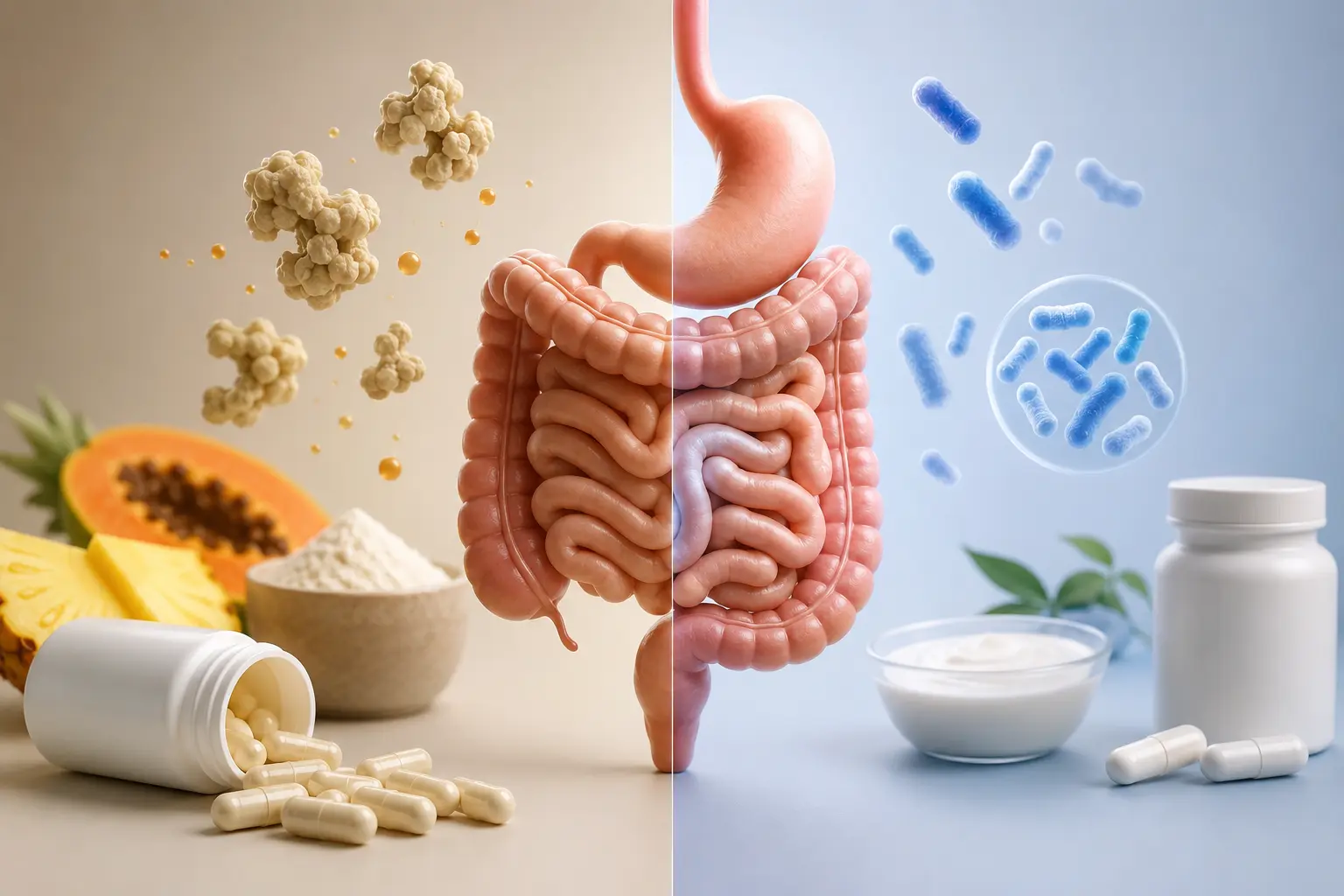
Many Parkinson’s patients experience digestive issues , particularly chronic constipation years before they develop tremors or stiffness. Scientists now believe that changes in the gut microbiome (the community of bacteria living in your digestive tract) may contribute to the disease’s progression.
Here’s the simplified version of what researchers think happens: an imbalance in gut bacteria triggers inflammation in the gut lining. This inflammation may cause a protein called alpha-synuclein to misfold and clump together. These clumps can then travel from the gut to the brain via the vagus nerve, gradually damaging the neurons that produce dopamine.
This pathway, from gut to brain — is called the gut-brain axis. And it’s the reason researchers are now asking whether supporting gut health through targeted probiotics could make a meaningful difference for Parkinson’s patients.
Not all probiotics are the same. Most commercial probiotics are designed for general digestive health reducing bloating, improving regularity, supporting immune function. PS128 is different.
PS128 (full name: Lactiplantibacillus plantarum PS128) was originally isolated from fermented Taiwanese vegetables and has been classified as a psychobiotic — a probiotic strain that specifically influences the gut-brain connection.
What makes PS128 unique is its ability to modulate neurotransmitter pathways, particularly dopamine and serotonin. Since Parkinson’s disease involves the progressive loss of dopamine-producing neurons, a probiotic that can influence dopamine signaling has obvious relevance.
PS128 has been the subject of multiple clinical studies across different conditions — from autism spectrum disorder to anxiety to stress management. But the research that’s generating the most interest right now is its application in Parkinson’s disease.
The most significant study on PS128 and Parkinson’s to date was a pilot clinical trial (registered on ClinicalTrials.gov as NCT04389762) involving 25 patients with Parkinson’s disease.
Participants took PS128 daily for 12 weeks alongside their standard Parkinson’s medications. The results were encouraging across several measures.
Motor function improved. Patients showed significant improvements in motor symptoms as measured by standard Parkinson’s rating scales. Importantly, these improvements came on top of their existing medication — PS128 wasn’t replacing treatment, it was complementing it.
“ON” time increased. Parkinson’s patients often experience fluctuations between “ON” periods (when medication is working and symptoms are controlled) and “OFF” periods (when symptoms return). The trial showed that PS128 supplementation was associated with longer ON times, meaning patients experienced more hours of symptom relief during the day.
Quality of life got better. Participants reported improvements in their overall quality of life scores, which encompass physical function, emotional wellbeing, and daily activities.
Inflammation markers decreased. Blood tests showed reduced levels of inflammatory markers, supporting the theory that PS128 works partly by calming gut-related inflammation that contributes to neurodegeneration.
It’s important to note that this was a pilot study with a relatively small group of participants. The results are promising but preliminary. Larger, placebo-controlled trials are needed to confirm these findings — and researchers have acknowledged this openly.
Parkinson’s is often defined by its visible motor symptoms: tremor, rigidity, slow movement. But many patients and their caregivers will tell you that the non-motor symptoms — the ones you can’t see — can be just as challenging.
These include chronic constipation, sleep disturbances, anxiety, depression, and mood fluctuations. Research suggests PS128 may help with several of these.
Constipation relief. Animal studies have shown that PS128 enhances intestinal motility and improves serotonin signaling in the gut. Since chronic constipation is one of the earliest and most persistent symptoms of Parkinson’s, this is a meaningful benefit.
Mood and anxiety support. PS128 has been shown in separate clinical trials to reduce anxiety and improve mood in stressed adults. For Parkinson’s patients, who frequently experience depression and anxiety as part of their condition, this dual benefit — motor improvement plus mood support — is particularly valuable.
Sleep quality. Participants in PS128 studies have reported improvements in sleep quality, which is a common struggle for people with Parkinson’s. Poor sleep worsens both motor and cognitive symptoms, creating a vicious cycle that better sleep can help break.
These non-motor benefits align with what we know about the gut-brain axis and mental wellbeing — the same biological pathway that connects gut health to emotional and cognitive function.
Clinical data tells one part of the story. Patient experiences tell another.
In documented case reports associated with PS128 research, patients have shared meaningful improvements in their daily lives. One patient described regaining fine motor skills — the ability to button a shirt or write more clearly — after consistent PS128 use. Another reported improvements in speech clarity, mood stability, and hand dexterity.
These aren’t miracle stories, and they shouldn’t be treated as guarantees. Individual responses vary, and PS128 is not a cure for Parkinson’s. But for patients and caregivers managing the disease day to day, even small improvements in daily functioning can represent a significant gain in quality of life.
Safety is always a priority, especially for Parkinson’s patients who are typically taking multiple medications.
PS128 has been granted GRAS (Generally Recognized As Safe) status. At the recommended dosage of 30 to 60 billion CFU per day, clinical trials and extensive consumer usage have reported no significant adverse effects.
That said, anyone with Parkinson’s disease should consult their neurologist or healthcare provider before adding any supplement including PS128 to their routine. While PS128 has shown no negative interactions with standard Parkinson’s medications in the studies conducted so far, individual circumstances vary.
Being transparent about limitations is important. Here’s what the current research hasn’t fully answered yet.
The pilot trial included only 25 patients. While the results were statistically significant, a larger sample size is needed to confirm that these benefits are consistent across a broader Parkinson’s population.
We don’t yet have long-term data beyond 12 weeks. Parkinson’s is a progressive disease, and understanding whether PS128’s benefits are sustained over months or years requires longer studies.
The exact mechanisms by which PS128 influences Parkinson’s symptoms are still being mapped. Animal studies suggest it involves serotonin signaling, inflammatory pathway regulation, and microbiome modulation, but the full picture is still emerging.
Future research including larger, randomized, double-blind, placebo-controlled trials will be critical in moving PS128 from “promising” to “established” in the context of Parkinson’s care.
PS128 is not a standalone treatment for Parkinson’s disease. It works best as part of a comprehensive care plan that includes standard medication (such as levodopa), regular physical exercise, a balanced diet rich in fibre and nutrients that support gut health, mental health support, and engagement with healthcare professionals.
Think of PS128 as one piece of a larger puzzle. It targets a specific biological pathway — the gut-brain axis — that standard medications don’t directly address. By supporting gut health, reducing inflammation, and potentially improving neurotransmitter signaling, it adds a layer of support that complements what medication and lifestyle changes are already doing.
For caregivers looking to support a loved one with Parkinson’s, adding a well-researched psychobiotic like PS128 is a low-risk, evidence-informed option worth discussing with the patient’s care team.
PS128 is available in Singapore through WellbeingSG as part of the Activhealth Multibiotics Mind supplement. Each capsule contains a clinically relevant dose of Lactiplantibacillus plantarum PS128.
If you have questions about whether PS128 is appropriate for your situation, feel free to contact our team — we work closely with healthcare professionals and can help connect you with the right information.

Enjoy free shipping when you spend $60 or more on your order.
Enter Voucher Code: firstorderdiscount