Free Singapore Delivery Above $60
Every time someone in the office starts coughing, the same thought crosses your mind – please not me, not this week. Then two days later, your throat feels scratchy, your energy drops, and you spend the next five days running at half capacity while pretending to be fine because Singapore’s work culture doesn’t really do sick days.
This cycle repeats three to four times a year for most adults. More if you have kids who bring home every virus from childcare and school. More if you commute on the MRT during peak hours where being pressed against strangers is unavoidable.
The frustrating part is that most of this is preventable – not by washing your hands more (though that helps), but by addressing the nutrient gaps that leave your immune system under-resourced in the first place.
Here’s what the clinical evidence says actually works for immune defence, specifically for people living in Singapore.
Before reaching for supplements, it helps to understand why you keep getting sick. Singapore’s environment creates immune challenges that many other countries don’t face.
The air-conditioning cycle. You walk from 33°C outdoor heat into a 22°C office. Your body thermoregulates. You walk back out. This happens 5-10 times daily. Each temperature transition stresses your mucosal membranes — the first line of immune defence in your nose and throat. Over time, this constant stress weakens local immunity in precisely the area where most respiratory infections enter.
Indoor lifestyle despite tropical climate. Singapore has one of the highest rates of indoor living globally. Office, MRT, mall, home – all air-conditioned. 40% of Singaporeans are vitamin D deficient because you need direct sun exposure to produce it, and most working adults here don’t get meaningful sun between 7am Monday and 6pm Friday.
Population density. Singapore’s 8,000 people per square kilometre means more exposure to more pathogens more frequently. The MRT alone puts you within breathing distance of dozens of strangers twice a day.
Year-round pathogen activity. Temperate countries get a winter “cold and flu season.” Singapore’s tropical climate means viruses circulate year-round without a seasonal pause — your immune system never gets an off-season.
Understanding these factors helps explain why generic advice like “eat more oranges” doesn’t cut it. Singapore’s immune challenges require targeted nutritional support.
If you take only one immune supplement in Singapore, make it vitamin D.
The evidence is unusually strong. A BMJ meta-analysis of 25 randomised controlled trials — one of the largest immune supplement evidence packages ever published – found that vitamin D supplementation reduces the risk of acute respiratory infections. The effect was strongest in people who were severely deficient, where supplementation cut respiratory infection risk by up to 50%.
Vitamin D isn’t just a vitamin – it’s a hormone precursor that activates immune cells throughout your body. Vitamin D receptors are found on virtually every type of immune cell. When vitamin D is low, your immune system operates like a security team where half the guards haven’t been given their access codes — they’re present but can’t do their jobs properly.
In Singapore, where 40% of the population is deficient despite living two degrees from the equator, vitamin D supplementation isn’t optional for immune health – it’s correcting a widespread deficiency that’s actively impairing your defences.
What to take: Vitamin D3 combined with K2. The K2 ensures that calcium mobilised by vitamin D goes to your bones rather than depositing in your arteries. A daily spray format is the simplest approach — no pills, no food timing requirements. For children, a kids-specific D3+K2 spray provides age-appropriate dosing.
Dose: 1,000-4,000 IU daily for adults depending on your blood levels. Take in the morning – not evening, as vitamin D may interfere with melatonin production if taken before bed.
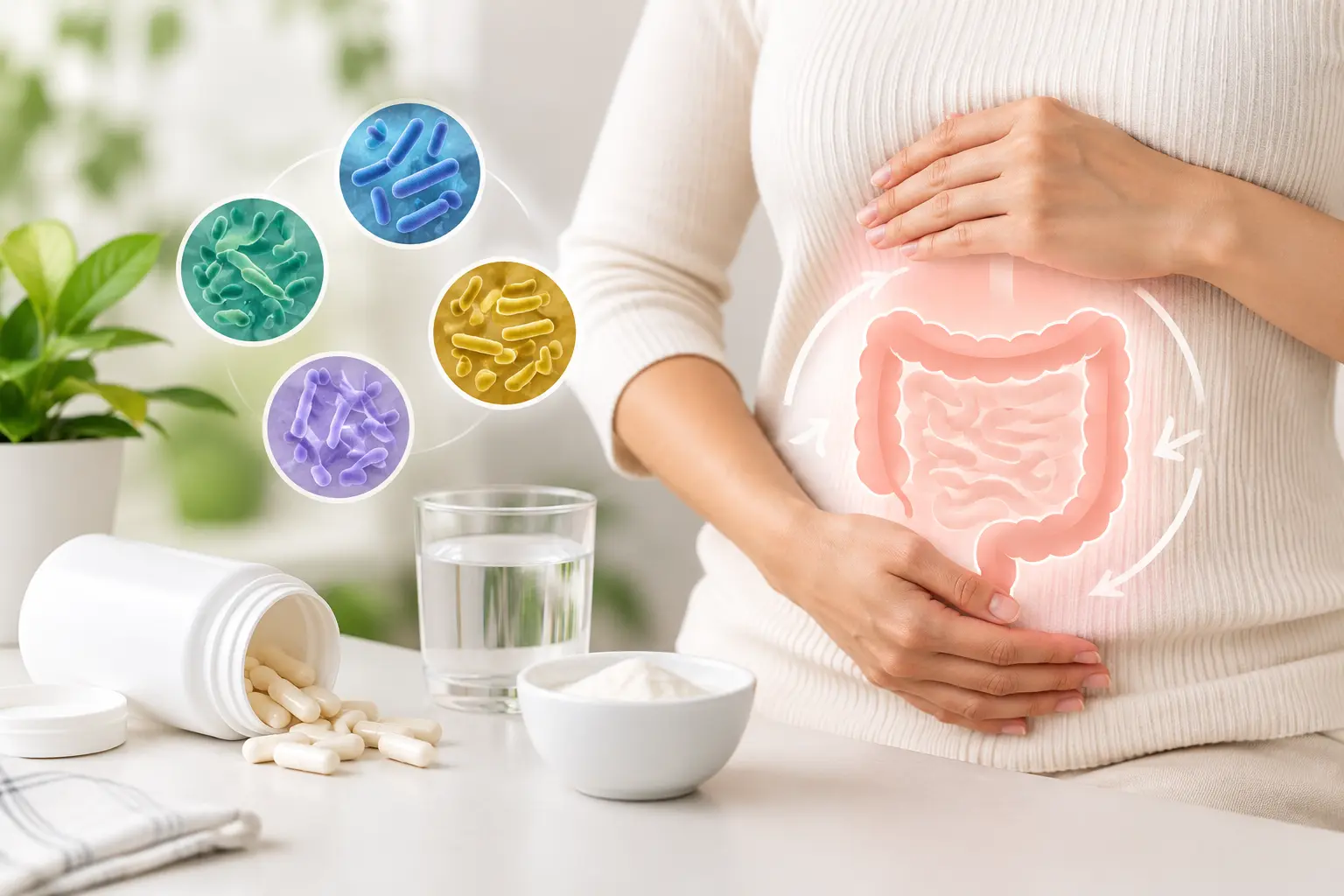
This number surprises most people: approximately 70% of your immune tissue is located in and around your gut. Your intestinal lining houses the largest concentration of immune cells in your entire body. When your gut microbiome is disrupted, your immune function suffers – regardless of how many vitamin C tablets you take.
Clinical evidence consistently shows that probiotics reduce both the occurrence and duration of upper respiratory tract infections in adults and children. A Cochrane review – the gold standard of medical evidence – found that probiotics reduce antibiotic-associated immune disruption by 52% and accelerate microbiome recovery post-antibiotic.
But strain selection matters enormously. A generic pharmacy probiotic with unspecified strains won’t deliver the same immune benefits as clinically researched strains. Our detailed probiotic strain selection guide explains how to match the right strain to your specific need.
For digestive-focused immunity: Digestive health probiotics with strains like Lactobacillus rhamnosus GG and Bifidobacterium lactis – these have the strongest immune research data specifically for reducing respiratory infections through gut-immune activation.
For stress-compromised immunity: Chronic stress suppresses immune function through elevated cortisol. If you’re the person who gets sick every time work pressure peaks or after a stressful period ends, the immune problem isn’t your nose – it’s your stress hormones. Psychobiotics that reduce cortisol address the root cause: cortisol suppression of immune function.
For children’s immunity: Kids in Singapore childcare catch 8-12 infections per year – that’s considered normal. Age-appropriate probiotics for children support developing immune systems and reduce both the frequency and severity of these infections.
Vitamin C is the most famous immune supplement — and the most misunderstood.
Here’s what the evidence actually shows: vitamin C doesn’t prevent colds in the general population. Taking 1,000mg of vitamin C daily won’t stop you from catching a virus. However, regular supplementation does reduce the duration and severity of colds — roughly 8% shorter duration in adults and 14% in children. For people under heavy physical stress (marathon runners, for example), vitamin C reduces cold incidence by about 50%.
The mechanism is real: vitamin C supports the production and function of white blood cells, acts as a powerful antioxidant protecting immune cells from oxidative damage, and helps maintain the skin and mucosal barriers that prevent pathogens from entering.
Where vitamin C matters most in Singapore is as a daily baseline, not as a rescue remedy when you’re already sick. Taking vitamin C after symptoms start shows minimal benefit — the research supports consistent daily use as prevention.
What to take: 500 -1,000mg daily, split between morning and evening for better absorption. Vitamin C gummies provide a practical format – especially for people who dislike swallowing pills and for children who need immune support in a form they’ll actually accept. Halal and vegan certified, making them suitable for Singapore’s diverse population.
Omega-3 fatty acids don’t appear in most “best immune supplements” lists – which is an oversight. Your immune system’s ability to respond appropriately to threats depends on controlling inflammation, and omega-3s are among the most effective anti-inflammatory nutrients available.
Chronic low-grade inflammation – common in people with high stress, poor sleep, excess weight, or high sugar diets – exhausts immune resources. Your immune system stays activated fighting internal inflammation, leaving fewer resources to combat actual infections.
EPA (eicosapentaenoic acid) from omega-3 supplements reduces this background inflammation, freeing your immune system to focus on genuine threats. Think of it as clearing the false alarms so the real alarms get proper attention.
Efamol’s clinically researched formulations provide optimal EPA-to-DHA ratios backed by over 30 years of fatty acid research.
Who needs this most: People who get sick frequently despite taking vitamin C and D, people with chronic inflammation markers, people whose immune system seems “overreactive” (allergies, autoimmune tendencies alongside frequent infections), and anyone whose diet lacks sufficient omega-3.
Magnesium doesn’t get headlines as an immune supplement, but research shows it plays a direct role in immune cell function. Magnesium-deficient immune cells respond more slowly to pathogens and produce fewer antibodies.
More practically, magnesium deficiency disrupts two things that profoundly affect immune health: sleep quality and stress response. Poor sleep suppresses immune function – even one night of inadequate sleep reduces natural killer cell activity by up to 70%. Chronic stress elevates cortisol, which directly suppresses immune cell production.
Magnesium bisglycinate taken in the evening supports both sleep quality and stress reduction, indirectly but powerfully supporting immune function through better recovery and lower cortisol.
Start with deficiency correction, then layer in targeted support.
Layer 1 – Fix deficiencies first (most important): Vitamin D3+K2 (morning) + Magnesium bisglycinate (evening). These correct the two most common deficiencies in Singapore that impair immune function.
Layer 2 – Add gut-immune support: Probiotic with researched strains (morning with breakfast). This activates the 70% of your immune system that lives in your gut.
Layer 3 – Add daily antioxidant protection: Vitamin C (500-1,000mg split AM/PM). This provides consistent baseline protection and reduces cold duration when you do catch something.
Layer 4 – Add anti-inflammatory support (if needed): Omega-3 EPA (morning with food). This is particularly important if you have chronic inflammation, high stress, or get sick frequently despite layers 1-3.
Check our complete daily supplement routine guide for optimal timing and combinations.
Mega-dosing vitamin C when you’re already sick. Taking 3,000mg of vitamin C after you feel a cold coming has minimal evidence of benefit. Your body can only absorb roughly 200mg at a time – excess is excreted. Consistent daily doses of 500-1,000mg work better than emergency mega-doses.
Echinacea. Some evidence for mild cold symptom reduction, but study quality is inconsistent and effects are modest at best. Not worthless, but not first-line either.
Colloidal silver. No clinical evidence for immune support. Potential for harm (argyria). Avoid.
Single-ingredient “immune boosters.” Products marketing one ingredient as a complete immune solution are oversimplifying. Your immune system has multiple pathways – no single nutrient addresses all of them. A targeted stack of 3-4 evidence-backed supplements outperforms any single “superfood” supplement.

Enjoy free shipping when you spend $60 or more on your order.
Enter Voucher Code: firstorderdiscount